
Top Travel First Aid Kits That Pack Truly Useful Contents

Introducing Maria, our meticulous planner and talented visual storyteller. She has a knack for discovering those hidden gems, chic boutique spots, and charming little cafes that add a touch of elegance to every journey. With her keen eye for photography and her passion for travel, Maria will transport you to the most enchanting corners of the world, inspiring you to explore new places, one picture-perfect destination at a time.
When hunting the best travel first‑aid kit, prioritize size, durability, and tools. The Mini 150‑Piece Waterproof kit packs 150 supplies and a waterproof shell, while the 107‑Piece Compact kit delivers gear plus a manual. Band‑Aid’s 80‑Piece set includes antibiotic cream. For a lighter carry, the 12‑Piece J&J kit covers everyday cuts, and the 100‑Piece water‑resistant pack keeps supplies organized. TSA‑Approved kits and Swiss Safe 64‑Piece options offer. Pick based on weight, scope, access—there’s more to learn.
Wichtigste Erkenntnisse
- Choose kits with 150 + pieces for comprehensive coverage of cuts, burns, fractures, and emergencies.
- Opt for waterproof or hard‑shell cases to keep supplies dry during travel mishaps.
- Ensure a compartmentalized layout for instant access to bandages, gauze, and tools.
- Verify inclusion of key items: tourniquet, antiseptic wipes, burn gel, and a clear instruction guide.
- Look for added value such as a language‑aid visual card or included pain‑relief medication.
Mini 150-Piece Waterproof First Aid Kit (Red)
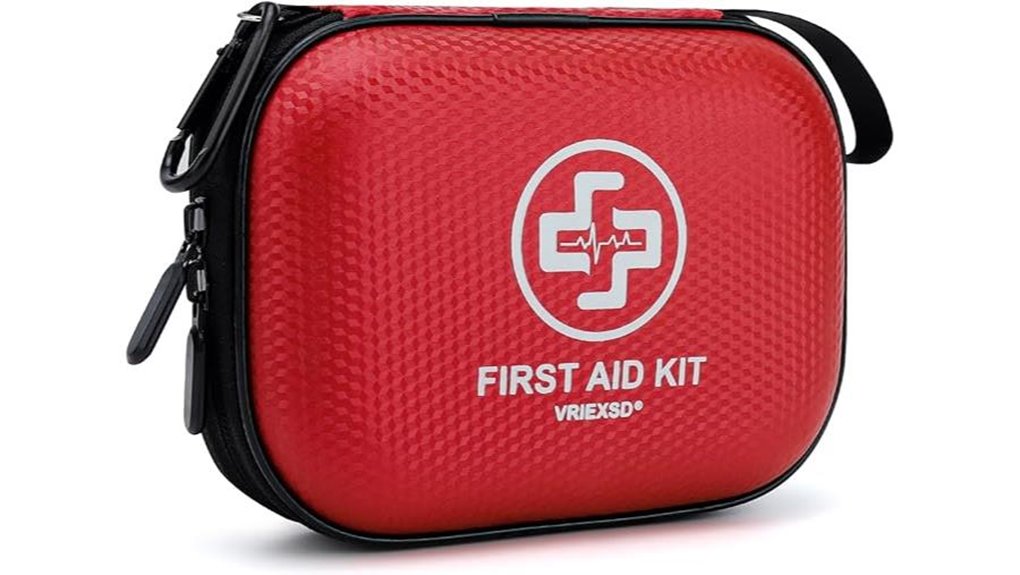
If you’re heading out on a weekend getaway or tackling a long hike, you’ll love how this Mini 150‑Piece Waterproof First Aid Kit slips into any backpack or vehicle.
It packs 150 supplies—bandages, gauze, dressings, elastic tape, adhesive strips—plus gloves, tweezers, a tourniquet, and povidone‑iodine pad. Its size (6.4×4.9×2.7 inches) and 0.73‑lb weight let you stash it in a car, bike, or cabin. Inside, 12 labeled compartments keep items organized for instant access, so you never waste time rummaging. The waterproof EVA shell and impact‑resistant design protect it from spills. It’s reliable kit for families, offices, and travelers alike.
Best For: families, travelers, hikers, and small office setups that need a lightweight, waterproof first‑aid kit.
Pros:
- Waterproof, impact‑resistant EVA shell protects supplies from spills and moisture.
- 12‑compartment layout with clear labeling speeds up access and reduces search time.
- Light 0.73‑lb weight and built‑in carabiner make it easy to hang or carry in any backpack or vehicle.
Cons:
- Does not include advanced medical tools (e.g., advanced sutures or specialized tourniquets).
- The 150-piece count can feel bulky for ultra‑compact packs despite the compact size.
- Only latex‑free gloves are included, which may not meet specific glove preferences or needs.
https://www.amazon.com/dp/B0DB794BKQ
107-Piece Compact First Aid Kit for Outdoor
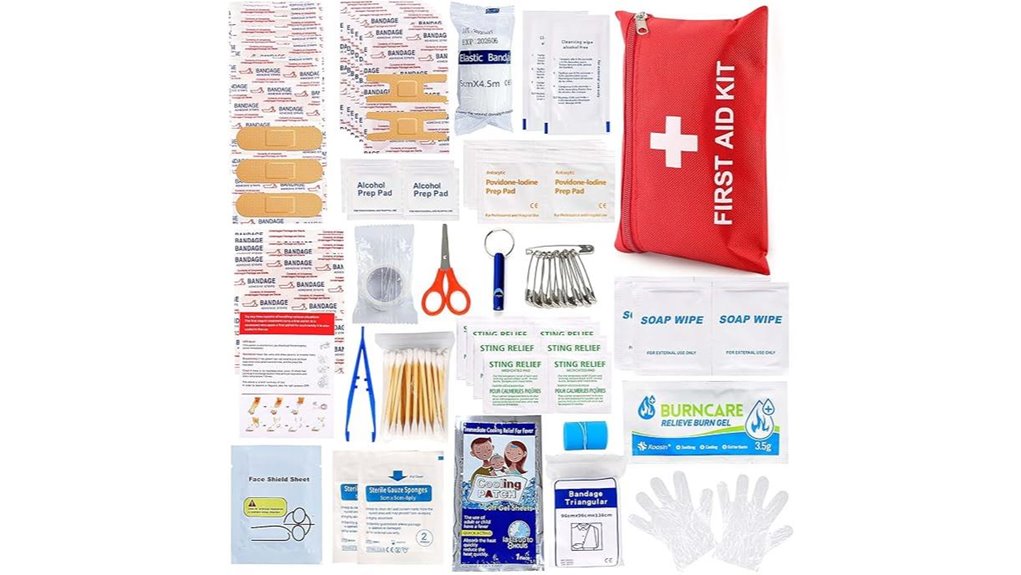
The 107‑piece compact first‑aid kit is the go‑to solution for anyone who spends time outdoors—whether you’re a weekend hiker, a seasoned camper, or a frequent traveler on a boat or RV.
Packed in a slim 7.5×5.2×1.5‑inch case, the kit holds 107 items—bandages, gauze, antiseptics, and trauma tools—arranged in inner sleeves for quick reach. The zipper seal keeps supplies secure and protected. The included manual offers step‑by‑step guidance, letting you respond confidently to cuts, scrapes, or sudden injuries. Its portability lets you stash it in a backpack, glove compartment, or boat storage, giving you peace of mind on any adventure.
Best For: outdoor enthusiasts, travelers, and anyone needing a compact, ready‑to‑use emergency kit for home, car, or adventure gear.
Pros:
- 107 carefully selected supplies covering cuts, scrapes, and trauma.
- Compact 7.5×5.2×1.5‑inch case that fits in backpacks, glove compartments, or boat storage.
- Included manual offers step‑by‑step guidance for untrained users.
Cons:
- Only basic first‑aid tools; advanced injuries still require professional care.
- No built‑in medication or advanced medical equipment.
- Small size limits ability to carry additional personal items.
https://www.amazon.com/dp/B0CQ4PBNG6
Band-Aid Travel First Aid Kit 80pcs
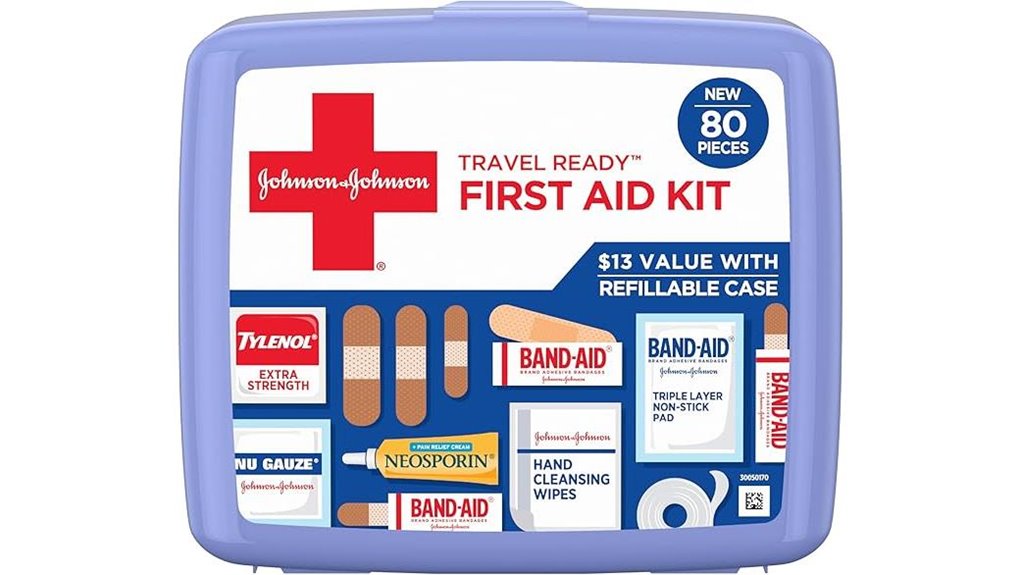
For anyone who packs light and wants instant first‑aid readiness, the Band‑AID Travel First Aid Kit 80pcs crams essential care into a compact case. You’ll find 80 items, including 30 flexible fabric bandages, 21 0.75‑x‑3‑inch TRU‑STAY straps, 10 2‑x‑2‑inch sterile gauzes, and 9 hand‑cleansing wipes. A full‑size Neosporin + Pain Relief antibiotic cream gives extra protection for cuts and blisters. Pack‑and‑go layout keeps everything organized for quick access while you’re on the road, at the campsite, or in a dorm. Its compact case slides into luggage or a backpack pocket, making it your reliable companion for spontaneous adventures or everyday errands. Never leave home.
Best For: travelers, backpackers, and anyone who needs quick first aid on the go.
Pros:
- Compact 80‑piece kit fits easily in luggage or a backpack.
- Includes a full‑size Neosporin + Pain Relief cream for cuts and blisters.
- Organized, pack‑and‑go layout ensures rapid access during emergencies.
Cons:
- Limited quantity of sterile gauze for severe wounds.
- No additional medical supplies such as pain relievers or adhesive tape.
- May not cover larger injuries requiring professional medical care.
https://www.amazon.com/dp/B0B41MYSGP
Johnson & Johnson First Aid to Go Portable Mini Travel Kit, 12 Pieces
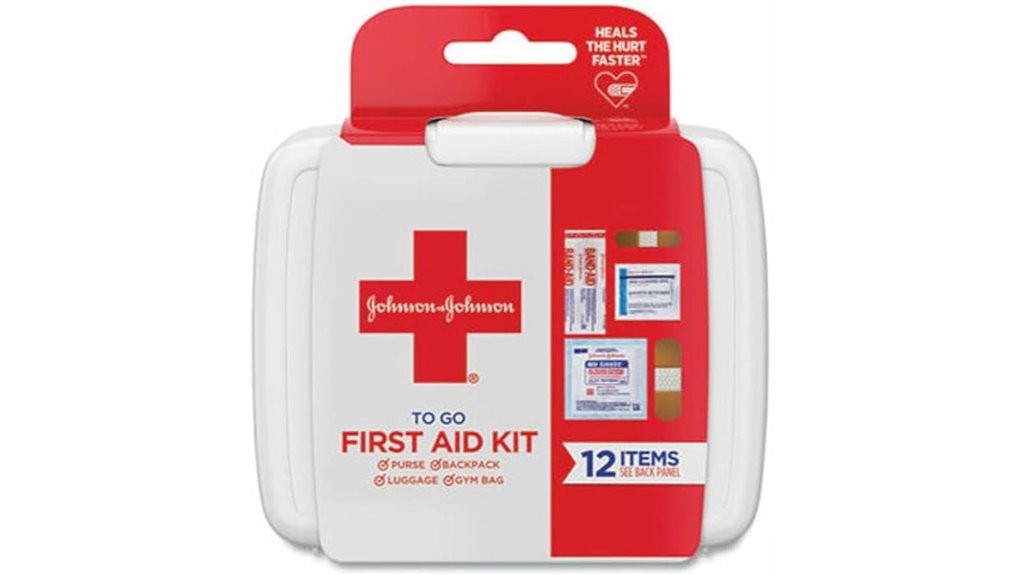
Because it packs essential items in a durable, compact plastic case, you’ll find it the perfect companion for travelers, commuters, and outdoor enthusiasts who need quick first‑aid access on the go. Inside, the kit contains twelve essentials: two cleansing wipes, four sterile gauze pads, two larger adhesive bandages, and four smaller ones. These cover minor cuts, scrapes, and blisters during hikes, flights, or gym sessions. The case slides into a purse or backpack without bulk. Note, some bandages include latex, so check labels if sensitive. Keep it daily cool and dry, and replace wipes or pads when empty to stay prepared.
Best For: travelers, commuters, and outdoor enthusiasts who need a compact, ready‑to‑use first‑aid kit for minor injuries on the go.
Pros:
- Durable plastic case fits easily in purses, backpacks, and luggage.
- Includes a balanced mix of wipes, gauze pads, and adhesive bandages for quick treatment of cuts, scrapes, and blisters.
- Compact design keeps the kit lightweight and non‑bulky.
Cons:
- Some bandages contain latex, posing a risk for latex‑allergic individuals.
- Limited to only minor first‑aid needs; not suitable for serious injuries.
- Small quantity of supplies may require frequent replacement.
https://www.amazon.com/dp/B002OTHOPE
Mini 100-Piece Water-Resistant First Aid Kit
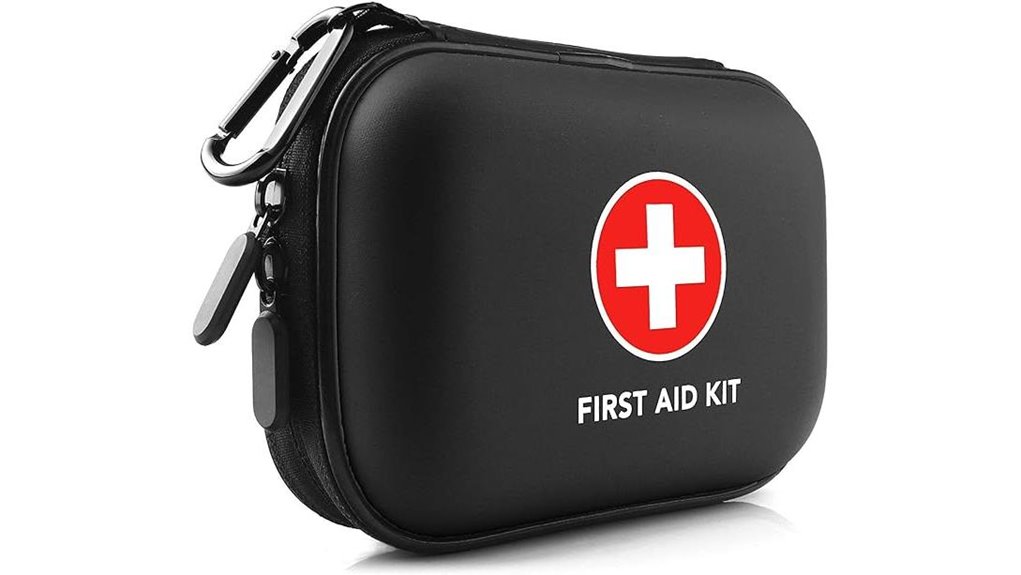
If you’re a road‑tripping enthusiast, this compact, water‑resistant 100‑piece kit fits right into the tiniest of vehicle trunks, letting you stay prepared for any mishap—whether you’re on a hike, a boat, or a long drive. Its 6.2 × 4.4 × 2.1‑inch case weighs 0.53 lb and is built from waterproof EVA with a reinforced shell. Inside, 100 hospital‑grade items—bandages, iodine pads, burn gel, PVC gloves, gauze—cover every emergency. Dual zippers grant quick access, while a carabiner attaches it to a seat belt or gear. Whether at home, on bike, or cruising a yacht, this kit delivers peace of mind.
Best For: Outdoor adventurers and travelers who need a lightweight, water‑resistant first aid solution that fits easily in any vehicle or backpack.
Pros:
- Ultra‑compact size and light weight make it ideal for tight spaces.
- Hospital‑grade, fully stocked with 100 pieces for a wide range of emergencies.
- Durable waterproof EVA construction and double zippers ensure quick, reliable access.
Cons:
- Limited to 100 pieces; may not cover very extensive medical needs.
- No built‑in organizer or labeling for quick identification of contents.
- Carabiner may be too bulky for some users who prefer a minimalist setup.
https://www.amazon.com/dp/B0974KYD1J
152-Piece Mini TSA-Approved First Aid Kit
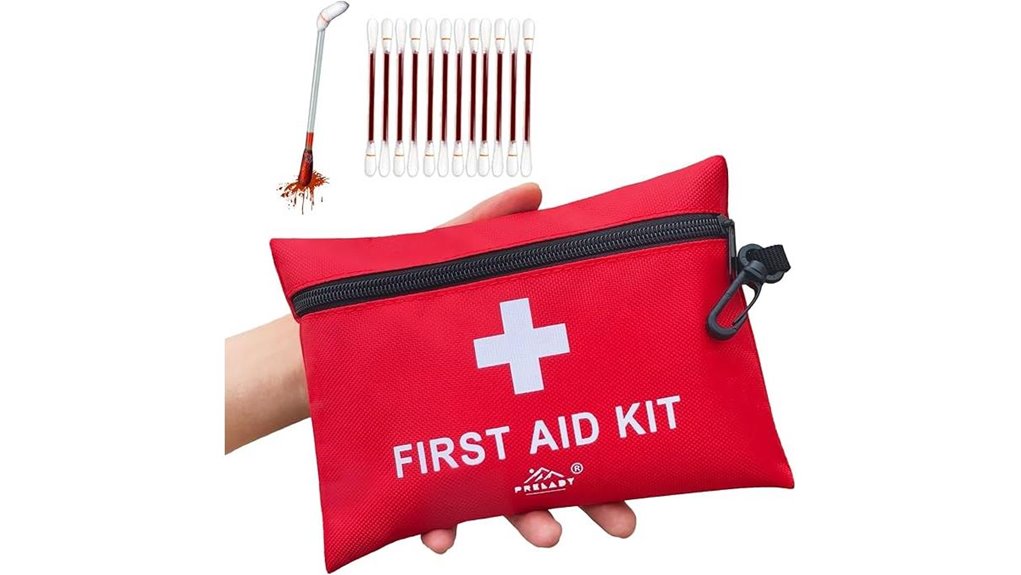
The 152‑piece Mini TSA‑Approved First Aid Kit packs a surprisingly extensive collection into a pocket‑size case, making it the go‑to option for frequent flyers who need a lightweight, compliant medical kit that won’t weigh down their carry‑on.
With dimensions of just 7.8 × 5.95 in. and a weight under a pound, you can stash it in a backpack, glove box, or any carry‑on without worry. Inside, 152 items—bandages, gauze pads, adhesive strips, antiseptic wipes, and more—cover cuts, scrapes, blisters, and minor injuries. Its TSA‑approved status lets you travel light while staying compliant with airline regulations. Whether you’re hiking, camping, or heading to the office, this compact kit adapts to any scenario, giving you peace of mind wherever you go for all adventures.
Best For: frequent travelers, outdoor enthusiasts, and anyone needing a lightweight, TSA‑compliant first aid solution.
Pros:
- Compact size and sub‑pound weight fit easily into carry‑on luggage, backpacks, or glove boxes.
- TSA‑approved and airline‑friendly, eliminating hassle at security checkpoints.
- 152 comprehensive items cover cuts, scrapes, blisters, and minor injuries for multi‑scenario use.
Cons:
- Limited to minor injuries; not suitable for serious medical emergencies.
- Small case may make it difficult to locate items quickly in a rush.
- No extra space for future expansions or specialized medical supplies.
https://www.amazon.com/dp/B0F1YHY2K7
298-Piece Emergency First Aid Kit, Compact Travel-Friendly
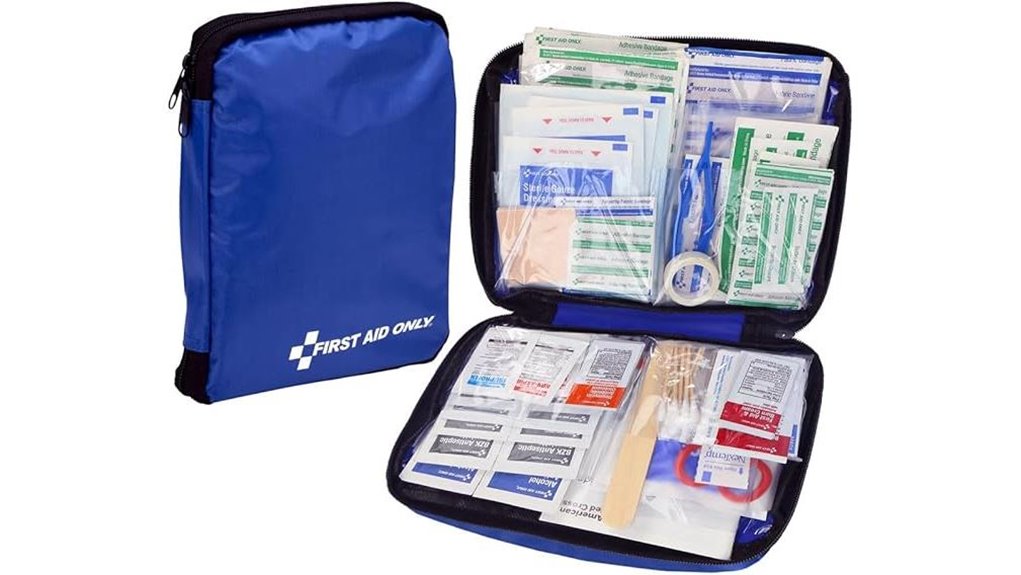
When you’re heading out on a weekend trip or long flight, the 298‑piece kit gives you a compact, all‑in‑one solution that fits snugly in any backpack, glove box, or office drawer. Inside, you’ll find 298 items: adhesive fabric and plastic bandages, antibiotic ointment, BZK antiseptic wipes, burn‑cream packets, a gauze roll, pads, wound‑closure devices, two cold packs, and more. Its soft‑sided, zippered case folds into two layers, each with clear plastic pockets that let you locate items instantly, no rummaging needed. HSA/FSA eligible, it fits in backpacks, glove boxes, desks, suitcases, or dorm cabinets—ideal for work, home, or trips.
Best For: adventurers, commuters, and anyone who needs a reliable, portable first‑aid solution for work, home, or travel.
Pros:
- Compact, two‑layer zippered case with clear pockets for instant access.
- 298 items, including bandages, ointments, wipes, burn cream, cold packs, and wound‑closure devices.
- HSA/FSA eligible, making it a smart, reimbursable health‑budget purchase.
Cons:
- Limited size means it may not accommodate larger dressings or emergency equipment.
- Weight can add up with 298 items, slightly heavier than single‑purpose kits.
- Requires regular restocking of consumables like ointment and antiseptic wipes.
https://www.amazon.com/dp/B000069EYA
Mini 150-Piece Waterproof Hard Shell First Aid Kit
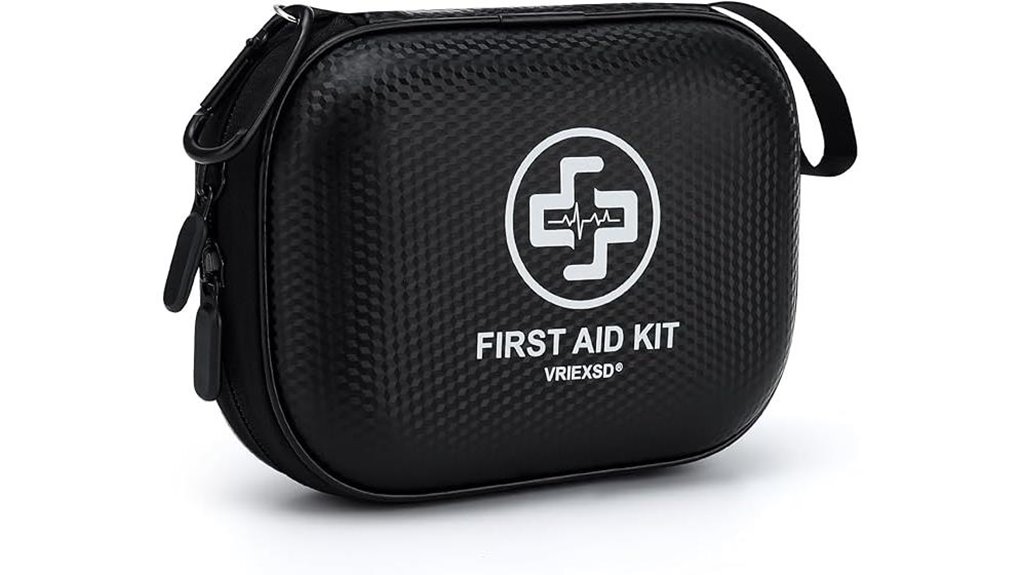
Pack your next adventure with this compact 150‑piece, waterproof hard‑shell kit, and you’ll feel confident whether you’re hiking, boating, or driving with the kids. Its 6.4 × 4.9 × 2.7‑inch case weighs just 0.73 lb, making it easy to tuck into a backpack or glove compartment. Inside, 150+ latex‑free, professional‑grade supplies—bandages, tweezers, tourniquet, povidone‑iodine pads—are sorted into clear compartments for instant access. The EVA shell resists water and impact, while a PU coating keeps contents dry and clean, so you never have to worry about damp bandages on a rainy hike. Add a carabiner or hook, and you’re ready for roadside or first‑aid emergencies.
Best For: families, office workers, and outdoor adventurers who need a compact, waterproof first‑aid kit that’s easy to carry.
Pros:
- 150+ professional‑grade, latex‑free supplies covering a wide range of injuries.
- Ultra‑compact and lightweight (6.4 × 4.9 × 2.7 in., 0.73 lb) with waterproof EVA shell and PU coating to keep contents dry.
- Segmented compartments and clear labeling for rapid, hassle‑free retrieval in emergencies.
Cons:
- No advanced medical equipment such as splints or prescription items.
- Small size limits the total amount of supplies compared to larger kits.
- Lacks an included medical instruction guide or reference sheet.
https://www.amazon.com/dp/B0DB794NGL
General Medi Mini 110-Piece First Aid Kit
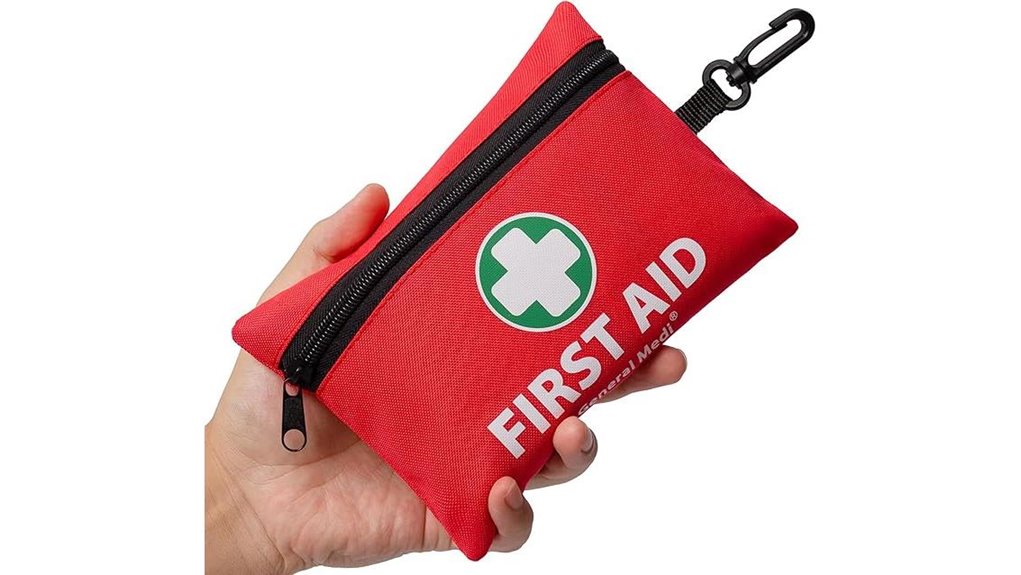
Looking for a compact, hospital‑grade first aid solution that won’t weigh you down? Because it meets global conformity standards, you can trust every piece is hospital‑grade quality. Inside, the 110‑piece kit holds a thermal foil blanket, multi‑use scissors, sterile gauze, elastic bandages, antiseptic wipes, tweezers, safety pins, adhesive tape, and a selection of essential tools that cover most injuries. Weighing 0.35 lb, the pouch folds neatly into a backpack or glove compartment, making it ideal for cars, schools, boats, kids’ activities, offices, outdoor adventures, camping, and the workplace. Built with high‑strength materials, it resists everyday wear and lasts long term.
Best For: people who need a lightweight, hospital‑grade first aid kit for travel, schools, cars, offices, or outdoor activities.
Pros:
- Compact and ultra‑light at just 0.35 lb for easy portability.
- 110 hospital‑grade items cover a wide range of injuries, ensuring comprehensive care.
- Durable, high‑strength construction resists everyday wear for long‑term reliability.
Cons:
- The small pouch may be too compact for users who prefer a larger, more visible kit.
- Limited to basic emergency care—doesn’t include advanced medical supplies.
- The price point may be higher than generic first‑aid kits without the hospital‑grade certification.
https://www.amazon.com/dp/B0747N5KDM
PTEROMY 150-Piece Portable Mini First Aid Kit
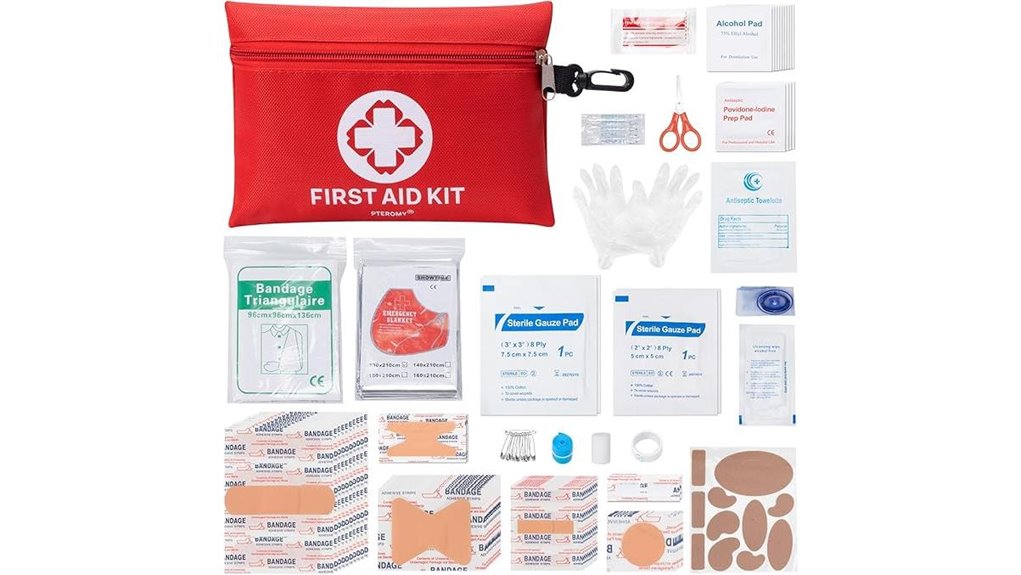
If you’re a frequent traveler who needs quick, reliable care on the go, the PTEROMY 150‑piece kit delivers a lightweight, complete supply that slides easily into any backpack, giving you confidence that cuts, burns, and blisters are covered. Inside, you’ll find 150 items—including adhesive band‑aids, triangular bandages, safety pins, and scissors—plus burn dressings, emergency blankets, a tourniquet, hydration wipes, and an instruction manual. It meets world‑class safety standards, so you trust each component to perform under pressure. Packaged in a case, it fits in a car, dorm, or hiking pack, and the manual guides you to apply treatments properly.
Best For: Adventurers, commuters, and anyone who needs a compact yet comprehensive first‑aid solution for quick, on‑the‑go emergencies.
Pros:
- Compact 150‑piece kit packs easily into backpacks, cars, or dorm rooms.
- Certified to global safety standards, giving peace of mind in critical moments.
- Includes a handy instruction manual and a variety of supplies for cuts, burns, blisters, and more.
Cons:
- 150 pieces can feel bulky for those seeking a truly minimal kit.
- Higher cost than basic 100‑piece options.
- Limited storage space may not accommodate larger or extra supplies for extended trips.
https://www.amazon.com/dp/B0D8HMNT8Z
Adventure Medical Kits Smart Travel First Aid Kit
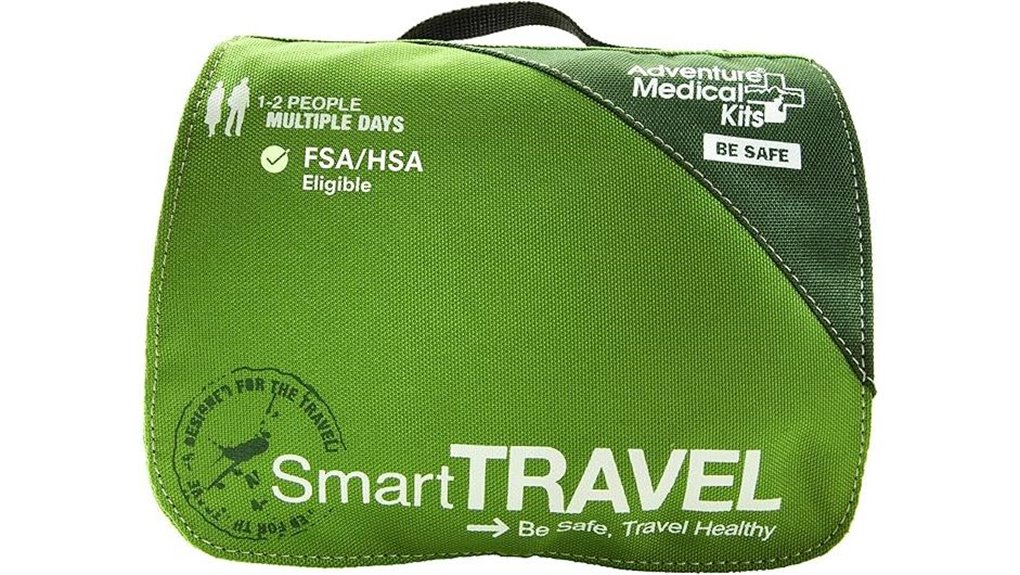
For anyone heading out on a weekend hike or family vacation, the Adventure Medical Kits Smart Travel First Aid Kit offers a compact, all‑in‑one solution—its green case hides a full pain‑relief and allergy‑med array, plus a unique Jump Over the Language Barrier Visual Communication Tool that lets you explain injuries in any language without a passport. Packed into a 0.95‑lb case, the kit includes bandage scissors, precision forceps, and a Smart Travel bandage set. Its 9.8 × 6.22 × 3.11‑in. pouch weighs 0.45 kg, making it light enough to fit in any backpack or luggage. You’ll find it ready for emergencies on any trip today.
Best For: travelers, hikers, and families on the go who need a compact, comprehensive first‑aid kit that includes language‑bridge tools.
Pros:
- Includes a full pain‑relief and allergy‑med array with hospital‑quality tools such as bandage scissors and precision forceps.
- Features the unique Jump Over the Language Barrier Visual Communication Tool for multilingual emergencies.
- Lightweight 0.95‑lb case fits easily into any backpack or luggage.
Cons:
- Only available in a single green color, limiting aesthetic choice.
- Its 9.8 × 6.22 × 3.11‑in. size is slightly bulkier than ultra‑compact kits for very light‑packing travelers.
- No online pricing or ranking information provided, which may hinder quick cost comparison.
https://www.amazon.com/dp/B0026MRZQM
Medi 420-Piece First Aid Kit (6-Pack)
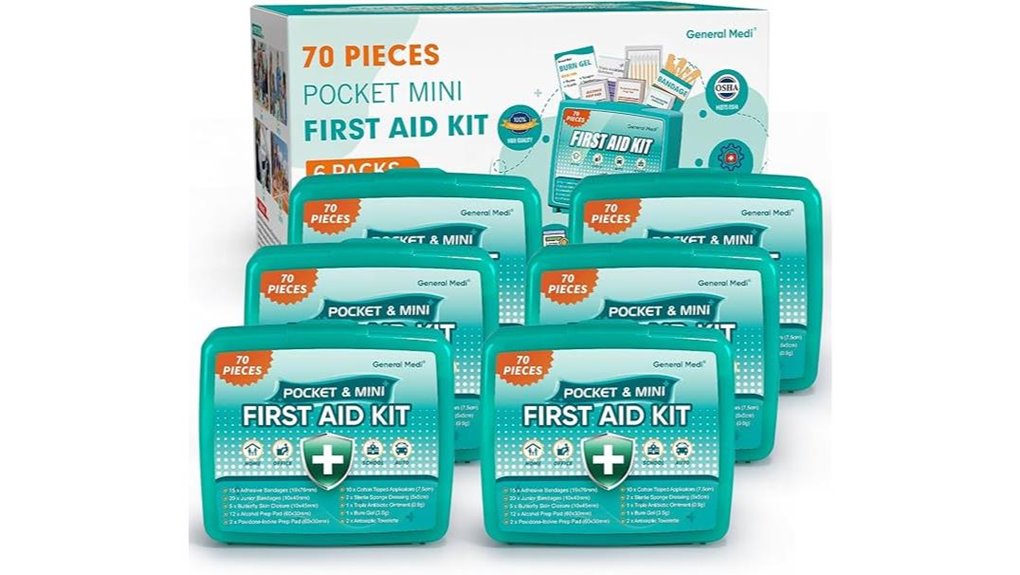
When you’re heading out on a road trip, the Medi 420‑Piece First Aid Kit (6‑Pack) delivers a lightweight, hospital‑grade emergency solution that fits in any travel case.
Each compact kit contains 70 hospital‑grade supplies, weighing 0.15 lb, so you can pack them all without adding bulk. Together, the six kits total 420 items, for injuries that may arise in a car, at home, or on a hike. All supplies carry a certificate of conformity, giving you confidence that every bandage, antiseptic, and splint meets global safety standards. The case’s design guarantees you can retrieve any item when an emergency strikes.
Best For: families, travelers, and outdoor enthusiasts who need a lightweight, comprehensive first‑aid solution for cars, homes, and adventures.
Pros:
- 420 hospital‑grade items across six kits for extensive coverage.
- Each kit is only 0.15 lb, keeping travel luggage light.
- Certified conformity gives peace of mind that every supply meets global safety standards.
Cons:
- Lacks specialized equipment for major trauma or medical procedures.
- Carrying all six kits can still add bulk when packing for longer trips.
- Higher upfront cost compared to single‑kit options.
https://www.amazon.com/dp/B0CX8YS42W
Mini 138‑piece TSA‑Approved First Aid Kit
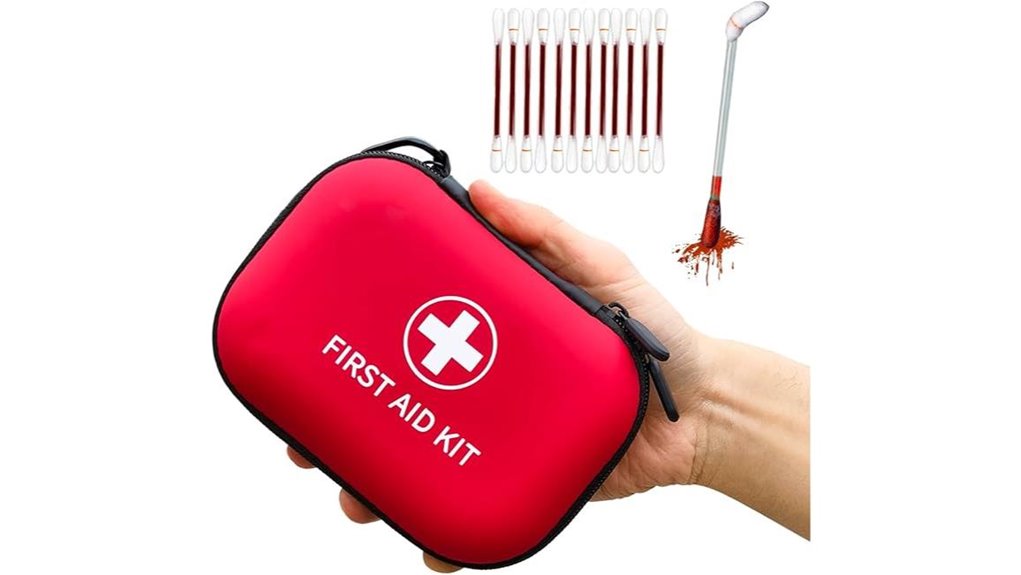
Travelers who need a compact, TSA‑approved first‑aid kit will appreciate its 138‑piece selection—enough for every minor cut, burn, or sprain without filling a carry‑on. You’ll find this kit lightweight enough to fit in your pocket or glove compartment, yet it houses essentials like gauze, antiseptic wipes, adhesive bandages, and a small scissors set. Its water‑resistant case keeps items dry on rainy hikes or during car rides. The compartmentalized design lets you locate supplies quickly, while the durable build guarantees reliability in emergencies. Whether you’re on a business trip or a weekend hike, it’s the practical, travel‑friendly solution you need today.
Best For: travelers, hikers, commuters, and small families who need a compact, TSA‑approved first‑aid kit that fits in a pocket or glove compartment.
Pros:
- TSA‑approved and compliant with airline regulations.
- 138 essential supplies in a lightweight, water‑resistant case.
- Compartmentalized design for quick access to supplies.
Cons:
- Limited to minor injuries; not a full medical supply.
- No built‑in first‑aid instruction guide.
- Some users may prefer larger kits with more specialized items.
https://www.amazon.com/dp/B0DK169KQ7
Swiss Safe 2-in-1 First Aid Kit (64-piece)
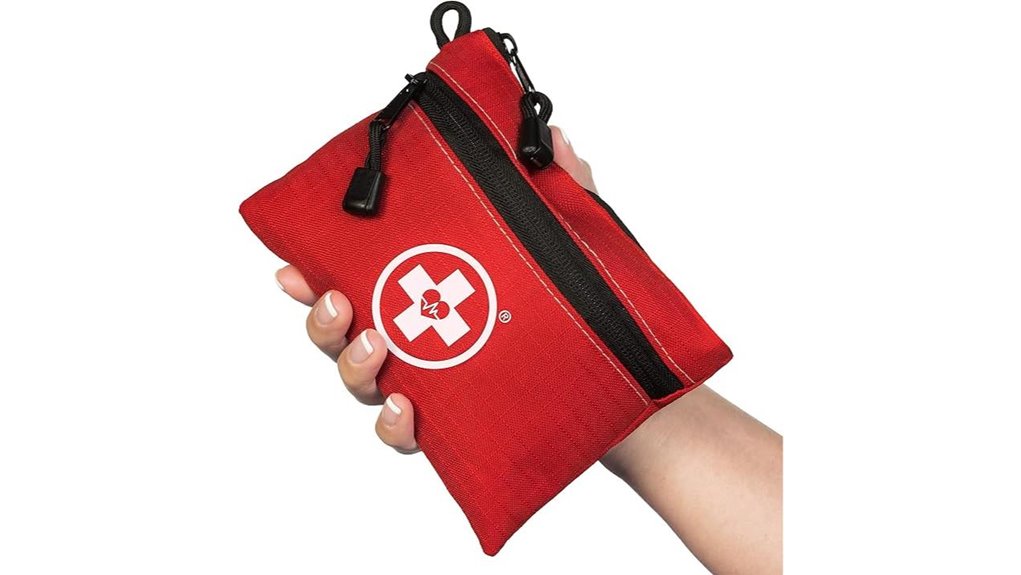
If you’re a seasoned hiker or a family that loves the outdoors, the Swiss Safe 2‑in‑1 First Aid Kit—loaded with 64 essential supplies—lets you stay prepared without the bulk. Inside, the kit offers large and small bandages, relief pads, a Mylar blanket, a fire‑starter rod, a wire saw, and fishing line—tools that handle cuts, burns, and emergencies on the trail. The woven nylon case resists rough handling and keeps items protected, while the compact profile fits neatly in a glovebox, backpack, or car trunk. With quick‑access pockets, you can retrieve supplies fast—ideal for families, solo travelers, or emergency enthusiasts. Pack smart.
Best For: seasoned hikers, families, and outdoor enthusiasts who want a lightweight yet comprehensive emergency kit.
Pros:
- 64 essential supplies packed into a compact, durable case.
- Quick‑access pockets and organized layout for rapid item retrieval.
- Versatile for use in gloveboxes, backpacks, or home first‑aid drawers.
Cons:
- Slightly heavier than single‑purpose first‑aid kits.
- May contain items not needed for every user, increasing clutter.
- The included wire saw and fire‑starter rod might be overkill for some situations.
https://www.amazon.com/dp/B07DHW3ZCF
500PCS Waterproof First Aid Kit for Travel
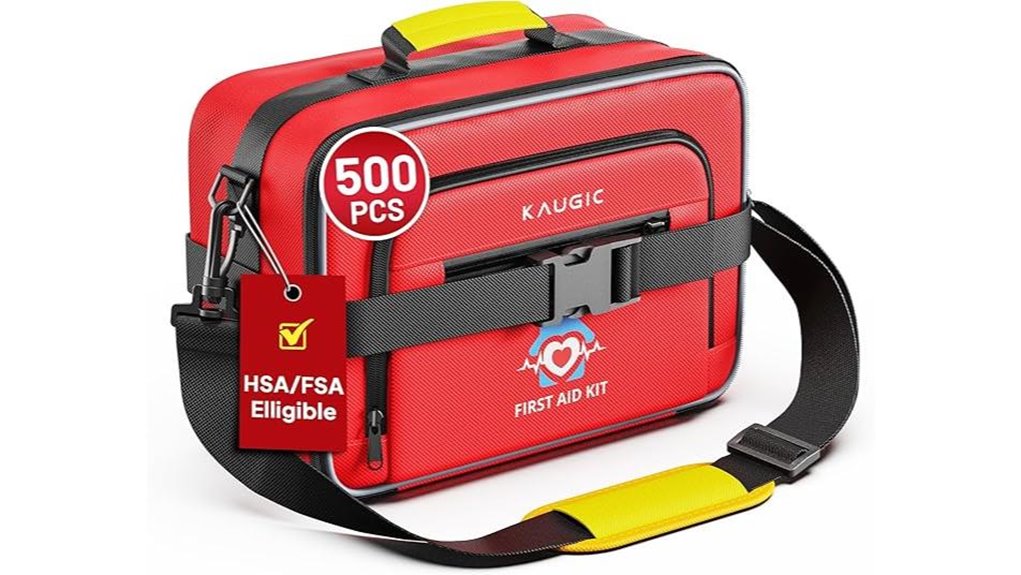
Ready for anything on the move, this 500‑piece waterproof kit gives you instant access to gauze, bandages, a CPR shield, and survival essentials—all packed in a rugged 1680D polyester case that keeps water out. You’ll find 500 items—gauze, closures, wound‑care supplies, a compass, blanket, whistle—organized into labeled compartments so you can grab what you need instantly. The adjustable shoulder strap and MOLLE attachment let you sling it cross‑body or clip it to backpacks, bikes, or cars. Its tear‑resistant material deflects punctures and splashes, making it sturdy for hikes, commutes, or office emergencies, and protect you while on the go.
Best For: adventurous travelers, outdoor enthusiasts, commuters, and anyone needing a compact yet comprehensive first‑aid solution on the go.
Pros:
- 500 versatile supplies, including gauze, bandages, CPR shield, and survival tools, all pre‑organized in labeled compartments for quick access.
- Ultra‑durable 1680D tear‑resistant polyester construction that resists punctures, abrasion, and water, keeping the kit dry and protected.
- Adjustable shoulder strap and MOLLE attachment enable cross‑body carry or secure attachment to backpacks, bikes, and vehicles, offering unmatched portability.
Cons:
- The large quantity of contents can make the kit noticeably heavier, especially when fully stocked.
- Its bulk and weight may feel cumbersome for short commutes or lightweight backpacking trips.
- The comprehensive range of supplies and rugged build come at a premium price compared to smaller first‑aid kits.
https://www.amazon.com/dp/B0G248Q6D4
Factors to Consider When Choosing Travel First Aid Kits (Actually Useful Contents)
When picking a travel first aid kit, you should compare its capacity and item variety to verify it covers all common injuries. Next, you’ll want to evaluate its size and portability, making sure it fits in your luggage or backpack without being bulky. Also check that the kit uses durable material, meets relevant certifications, and features clear labeling for quick access.
Capacity and Item Variety
A extensive kit that holds at least 150 items can cover almost any minor mishap you might face on the road.
You’ll want a balanced spread between basic bandages, gauze, and adhesive tapes, and specialty gear like tweezers, scissors, and safety pins.
Include medical tools that handle cuts, splints, and eye washes to respond to injuries on the fly.
Add emergency items—antibiotic ointment, burn gel, and a lightweight blanket—for situations beyond cuts and scrapes.
A well‑organized layout with labeled compartments lets you locate supplies quickly, saving precious seconds.
Aim for 100–300 pieces; the higher the count, the more redundancy you get for repeated use or traveling with a group.
With this capacity, you’ll be prepared for most emergencies while staying efficient in any travel scenario.
Size and Portability
Because travel first‑aid kits are often measured around 6½ × 4½ × 3 in., they fit neatly into glove compartments, backpack pockets, or overhead luggage bins. When you choose a kit, consider its weight—most models range from 0.3 to 0.8 lb.—so you can carry it without adding bulk. Compact designs often feature 10 to 15 separate compartments and a hard‑shell EVA shell that keeps supplies dry and protects against impact. Quick‑find access is key; you won’t want to rummage through an entire case in a pinch. Many portable kits include a single or double zipper and a carabiner or hook, letting you clip the kit onto backpacks, bicycles, or vehicle sides for extra space. Remember that TSA rules limit carry‑on volume to 22 × 14 × 9 in., so keep your kit below that size. A lightweight kit under one pound lets you travel lighter while still having bandages, gauze, antiseptic wipes, and emergency tools today.
Material Durability
Selecting the right material for your kit’s shell sets the standard for how long it’ll survive the rigors of travel. Most high‑quality cases use EVA, giving a 10‑15 mm impact‑absorbing layer that cushions drops and keeps contents dry. Inside, a polyurethane lining wipes clean and seals moisture even in heavy rain. Hard‑shell options feature a 2–3 mm polycarbonate or ABS core, boosting crush resistance by 40 % compared to soft‑sided cases, so you can lug it through airports and road trips. Premium zippers use metal or nylon teeth that endure over 1,000 cycles, and silicone coating cuts water penetration. Accessories—carabiners, hooks—are anodized aluminum or stainless steel, resisting corrosion while holding 5,000 lb of tension. With these materials, you’ll travel confident, knowing every component can withstand harsh environments and forever.
Compliance and Certifications
When you’ve already chosen a durable shell, you’ll still need to check that the kit carries the right certifications so you can travel without hassle. First, verify ISO 13485:2016 certification—this guarantees strict quality control for every component. Next, confirm FDA 21 CFR Part 820 compliance, confirming sterile bandages, gauze, and antiseptics are safe for use. TSA‑approved labeling lets you board without inspection, meaning the kit contains no prohibited aerosols or sharp objects. CPSC standards must cover scissors, tweezers, and safety pins, protecting you from flammability and sharpness hazards. Finally, look for GMP certification on gloves and wound dressings, which signals production under sanitary conditions to prevent contamination. By confirming these certifications, you verify that every item in your kit meets safety and quality standards, giving you confidence on trip.
Labeling and Organization
If you want to cut your search time, label every compartment with clear, high‑contrast text or icons—a tweak that can speed retrieval by up to 30 %. Next, segment supplies by size—group 0–3 in bandages together, then 3–6 in, and so on. This size‑based layout cuts the time you spend hunting the right item. Install a quick‑find system: color‑code or number 10–15 high‑frequency items in dedicated slots, letting you locate them in under ten seconds. Use waterproof labels on every side; they stay legible after rain, sweat, or a dropped kit, so you won’t have to decipher faded ink. Finally, keep first‑aid basics in the outer pocket and reserve inner compartments for specialty tools. This hierarchy guarantees you reach critical items without unpacking the whole kit right.
Häufig gestellte Fragen
How Often Should I Replace Expired Supplies in My Travel Kit?
You should replace expired supplies every 6 to 12 months, depending on each item. Bandages, antiseptics, and pain relievers lose potency over time, while blister treatments and alcohol wipes often stay effective longer. Check expiration dates monthly, and if anything’s past its date, swap it out immediately. Keep a spare kit on hand, so you never run short during a trip and double‑check before departure for extra peace of mind.
What Is the Best Way to Store a First Aid Kit When Traveling by Car?
Keep your first‑aid kit in a secure, easily reachable spot—like the glove box or center console—so you can grab it instantly during a stop. Store it in a waterproof pouch to protect against spills, and use a zip‑lock bag to keep supplies sealed. Label each container clearly, and check expiration dates monthly. By staying organized, you’ll stay prepared for any roadside emergency and guarantee your peace of mind you go.
Can I Add Prescription Medication to a Tsa-Approved Travel Kit?
Yes—you can tuck prescription meds into a TSA‑approved kit, but do it right. Keep each pill in its original bottle or blister pack, and retain the prescription label and doctor’s note. Place the container in a separate zip‑lock bag inside the kit so inspectors can see it without opening the whole kit. Follow TSA guidelines, and you’ll travel smooth and compliant, for peace of mind and a hassle‑free trip.
How Do I Customize a First Aid Kit for a Child’s Needs?
Think of customizing a child’s first aid kit like assembling a tiny toolbox for a budding explorer. Start by choosing child‑safe sizes—use 5‑ml gauze pads and a 120‑ml bottle of pediatric antibiotic ointment. Add a small digital thermometer, a pair of safety scissors, and a blister‑bandage kit. Include a handwritten note with your child’s allergies and a list of nearby pediatric clinics. You’ll feel confident, knowing you’re ready for adventure.
What Should I Do With a First Aid Kit After a Prolonged Trip?
After a prolonged trip, you should first check every item for expiration, especially medications and antiseptics. Then, replace any used or expired supplies and restock the kit with fresh bandages, gauze, and clean gloves. Clean the container, wipe it down, and store it in a dry place. Finally, label the kit with the date updated so you’ll know when to revisit it, and keep it handy for future adventures everywhere.
Schlussfolgerung
When you hit the road, a travel first‑aid kit is your trusty compass, pointing you toward safety no matter the detour. By choosing a compact 107‑piece or a water‑resistant 138‑piece set, you keep your essentials—bandages, antiseptic, and emergency tools—within arm’s reach. Remember, the right kit balances size, coverage, and TSA‑approval, so you’re prepared to tackle any mishap with confidence. Your preparedness will make any journey feel risky and adventurous, turning setbacks into stories of resilience.
adventure gear, Essential Kits, Travel First Aid
 German
  English
  French
  Italian
  Spanish