
2 Best Travel First-Aid Kit

Introducing Maria, our meticulous planner and talented visual storyteller. She has a knack for discovering those hidden gems, chic boutique spots, and charming little cafes that add a touch of elegance to every journey. With her keen eye for photography and her passion for travel, Maria will transport you to the most enchanting corners of the world, inspiring you to explore new places, one picture-perfect destination at a time.
You’ll find the 300PCS Portable First Aid Survival Kit** and 400 Piece Large First Aid Kit as your top two choices for travel emergencies. You get 300-400 essentials like bandages, gauze, tweezers, and emergency blankets in compact, waterproof designs perfect for adventurers and families. They’re versatile for sports, home, or trips, with organized compartments** for quick access. Explore factors like size, contents, and durability next to pick what’s best for you.
Principales conclusiones
- 300PCS Portable First Aid Survival Kit excels for travelers with 300 essentials in compact, versatile design.[BACKGROUND]
- 400 Piece Large First Aid Kit suits adventurers with 400 items in waterproof 1680D polyester.[BACKGROUND]
- Both kits offer organized compartments for quick emergency access during travel.[BACKGROUND]
- Ideal for outdoor enthusiasts, families, and sports teams needing portable preparedness.[BACKGROUND]
- Choose based on group size, trip duration, and activity for optimal travel fit.[BACKGROUND]
300PCS Portable First Aid Survival Kit
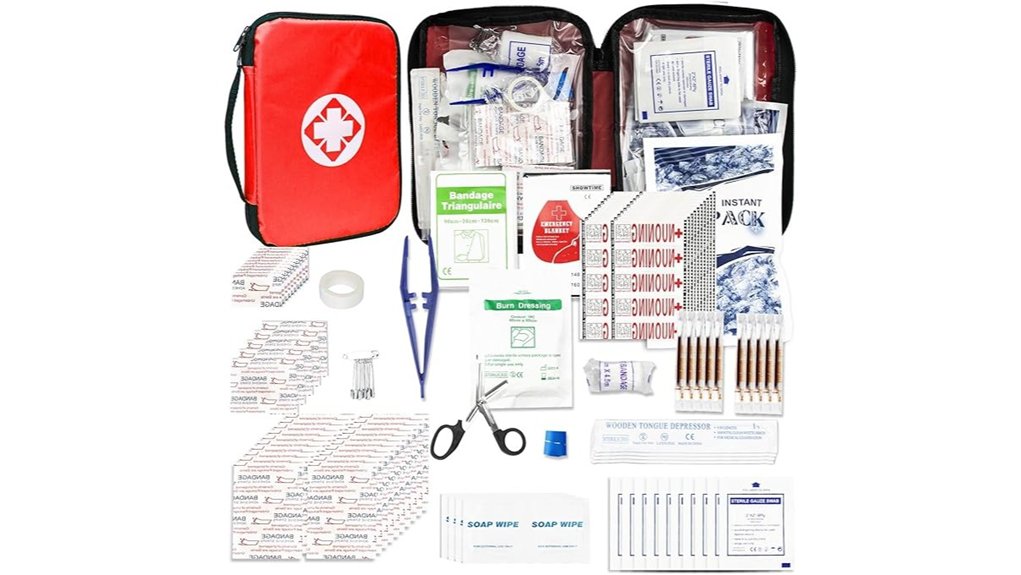
If you’re an active traveler hitting the trails, roads, or disaster-prone spots, the PCS Portable First Aid Survival Kit** stands out with its 300 pieces of essentials like bandages, gauze, tweezers, and an emergency blanket—you’ll stay prepared without the bulk. You’ll carry cotton swabs, adhesive bandages in assorted sizes, burn dressings, tongue depressors, gauze sheets, safety pins, triangular bandages, instant ice packs, scissors, and tweezers in a compact case. Use it at home, for travel, work, sports, emergencies, or disasters as a versatile first aid**, survival, or preparedness kit. Triangular bandages double as slings or splints; the blanket keeps you warm. Gift it to teams or family—you’ll protect minor cuts effortlessly.
Best For: Active travelers, outdoor enthusiasts, emergency preparedness-minded individuals, and sports teams seeking a compact, comprehensive first aid solution.
Pros:
- Contains 300 pieces of essential supplies in a compact, portable case suitable for multiple settings (home, travel, workplace, emergencies)
- Includes versatile items like triangular bandages that serve multiple functions (bandaging, splinting, sling creation) and an emergency blanket for warmth in disasters
- Assorted adhesive bandage sizes and diverse supplies (gauze, tweezers, scissors, ice packs) address a wide range of minor injuries and medical needs
Cons:
- The large quantity of 300 pieces may result in expired or unused items if not regularly rotated or used
- Compact size could mean limited space for larger or more specialized medical supplies beyond basic first aid
- No indication of refill availability or replacement options once supplies are depleted
https://www.amazon.com/dp/B0C5J8MVDD
400 Piece Large First Aid Kit for Home & Outdoor
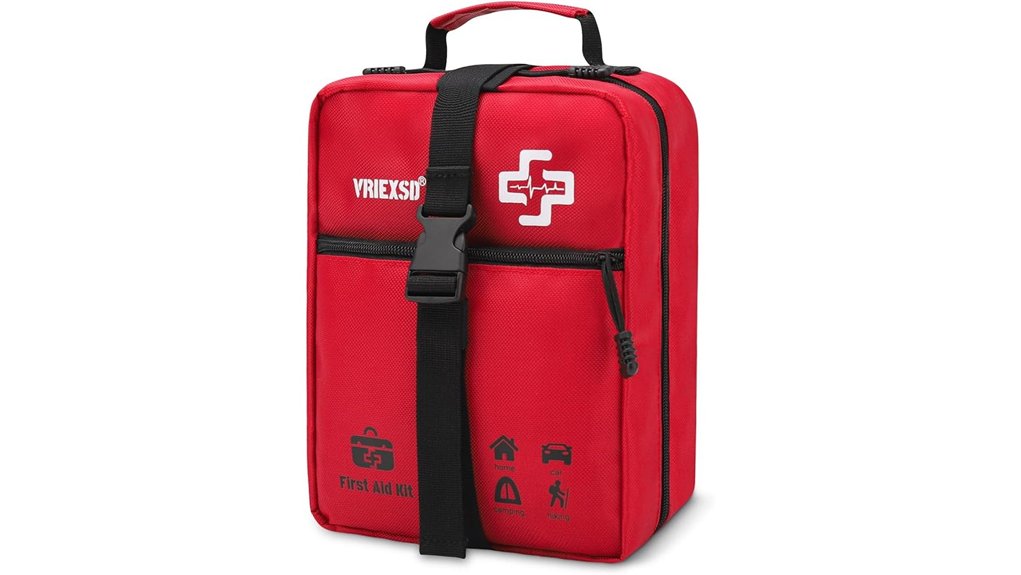
Outdoor adventurers choose the 400 Piece Large First Aid Kit for Home & Outdoor as their best travel companion because its divided compartments and waterproof 1680D polyester construction deliver organized, rugged protection during hiking, camping, or emergencies. You’ll appreciate its portable 9.4″x3.9″x6.8″ size at just 2.64 lbs, perfect for your car, office, or backpack. It packs 400 essentials like adhesive bandages, tourniquets, trauma dressings, emergency blankets, and a first aid guide to handle wounds, bleeds, and disasters swiftly. You’re ready for family trips, sports, or survival—treat minor injuries promptly and stay prepared anywhere.
Best For: Outdoor adventurers, families, and sports enthusiasts needing comprehensive emergency preparedness for hiking, camping, travel, or home use.
Pros:
- Organized divided compartments and external kit map enable quick access to supplies during emergencies.
- Durable waterproof 1680D polyester construction ensures rugged protection in outdoor conditions.
- Portable at 9.4″x3.9″x6.8″ and 2.64 lbs, with 400 essentials including tourniquets, bandages, and first aid guide for groups up to 10.
Cons:
- Bulkier size and weight may be less ideal for solo ultralight backpacking compared to minimalist kits.
- Lacks advanced medications like antibiotics, focusing mainly on wound care and trauma.
- Requires user familiarity with contents for effective use in high-stress situations.
https://www.amazon.com/dp/B0BFN7K6ZZ
Factors to Consider When Choosing Travel First-Aid Kit
When choosing a travel first-aid kit, prioritize kit size to fit your luggage without excess bulk, contents variety for bandages, meds, and tools covering cuts to stomach issues, and portability features like zip pouches for quick access. You’ll also want durability materials such as waterproof containers that withstand rough handling, plus versatility uses adapting to destinations from cities to wilderness. These factors guarantee you’re prepared without overpacking.
Kit Size
Several key factors should guide your choice of travel first-aid kit size: trip duration, group size, activity type, and medical needs. Choose a compact kit that fits easily in your luggage or backpack—you don’t want it weighing you down on hikes or long journeys. Opt for smaller versions, like a 1L dry bag, on short solo trips or day hikes; they’re perfect for essentials without bulk. Scale up to 3L or larger for extended adventures, bigger groups, or high-risk activities like backpacking, where you’ll need more supplies for cuts, sprains, or allergies. Balance item count with portability, ensuring quick access and organization for emergencies—test it fits your pack first. Prioritize lightweight, water-resistant designs tailored to your group’s special needs, like allergies or remoteness from care.
Contents Variety
Don’t forget a first aid guide for step-by-step instructions on treating common issues. This diverse selection prepares you for everyday mishaps or serious travel emergencies, ensuring you’re ready anywhere.[FACTS]
Portability Features
Opt for durable materials like waterproof fabric or 1000D nylon that withstand moisture, rough handling, and environmental extremes while protecting contents. You’ll access supplies faster in divided compartments, avoiding rummaging during emergencies. Guarantee the kit’s size—such as 13.75″ x 10.75″ x 3″—fits your travel setup yet holds essentials for real threats. This setup keeps you prepared without weighing you down on hikes, trips, or daily adventures.
Durability Materials
Your first-aid kit’s durability depends on the materials that form its foundation. Waterproof fabrics and high-density polyester**—such as 1680D nylon—resist moisture, abrasion, and environmental stress that threaten your supplies during travel. Choose durable, waterproof fabrics that withstand outdoor conditions and shield contents from moisture. Opt for kits crafted from high-quality 1680D polyester, which delivers superior resistance to wear and tear on the go. Confirm compartments use strong, tear-resistant materials** to maintain organization and quick access in rugged environments. Verify a sturdy zipper or closure that prevents spills and losses during transit. Finally, pick lighter yet tough materials for effortless portability without sacrificing reliability.
Versatility Uses**
A versatile travel first-aid kit handles multiple scenarios, from home and workplace emergencies to outdoor adventures and trips. You’ll want supplies that address common injuries across different settings—adhesive bandages, gauze pads, and antibiotic ointment form your foundation. Include multipurpose items like elastic wraps and triangular bandages that immobilize injuries or provide warmth when needed. Emergency blankets serve dual purposes: retaining body heat during exposure and creating makeshift slings. Organized compartments enhance accessibility, letting you quickly locate necessary items during stressful moments. A compact, lightweight design guarantees portability for hiking, camping, or international travel without sacrificing essential supplies. This balanced approach means you’re prepared whether you’re treating a kitchen burn at home or managing a blister on a remote trail.
Preguntas frecuentes
Can I Bring First-Aid Kit on Planes?
Yes, you can bring a first-aid kit on planes in both carry-on and checked bags. Pack bandages, gauze, and non-prescription meds freely, but keep scissors and tweezers blades under 4 inches for carry-on. Follow the 3-1-1 rule for liquids like sanitizers or meds over 3.4 ounces—declare them at security. Check airline rules and pack in a clear bag for smooth screening.
How Do I Maintain First-Aid Kit Freshness?
Don’t let your first-aid kit turn into a dusty relic—keep it fresh and ready to save the day. Store it in a cool, dry place away from sunlight. Check perishables like meds, ointments, and wipes every six months; replace expired ones and those nearing dates. Do a yearly deep inspection: test gear, swap batteries, update contacts and plans. Restock used items immediately, and verify before trips. You’ll travel confidently. (70 words)
What’s the Cost of a Good Travel Kit?
You’ll find good travel first-aid kits cost $10-$50 for basics like Johnson & Johnson’s 80-piece kit at $18.79 or Adventure Medical’s hiker kit at $32.95. You get essentials—bandages, wipes, gauze—in compact, highly rated options from Target or REI. For premium waterproof versions, expect $75-$200 from brands like Surviveware or MyMedic, balancing size, durability, and contents for your trips.
Are Pre-Made Kits Better Than Custom?
Like a tailor crafting your perfect suit, custom first-aid kits fit your trip’s unique risks better than off-the-rack pre-made ones. You avoid wasteful extras and shortages by tailoring contents to group size, terrain, activities, and duration—you’ll only buy what you need. Pre-mades save time for beginners, but you customize for precision, ensuring you’re ready without excess bulk or cost.
How Heavy Is a Typical Travel Kit?
A typical travel first-aid kit weighs 0.5 to 2 pounds (0.2-1 kg), so you pack light without sacrificing essentials. You’ll find ultralight options at 3-6.5 oz for hikes, like Adventure Medical’s .5 kit, or slightly heavier ones at 1.25 kg (2.75 lbs) for vehicles. Choose based on your trip—you trim bulk by skipping extras, keeping it under 2 lbs for easy carry-on.
Conclusión
You choose the 300PCS Portable First Aid Survival Kit** or the 400 Piece Large First Aid Kit by weighing kit size against your pack space, contents variety against your trip risks, portability features against your mobility needs, durability materials against rugged terrains, and versatility uses against diverse emergencies. You equip yourself confidently, you travel prepared boldly, and you adventure securely**.
adventure essentials, first-aid kit, travel safety
 Spanish
  English
  German
  French
  Italian