
Compression Cubes That Won’t Rip: Stitching Quality Matters

Introducing Maria, our meticulous planner and talented visual storyteller. She has a knack for discovering those hidden gems, chic boutique spots, and charming little cafes that add a touch of elegance to every journey. With her keen eye for photography and her passion for travel, Maria will transport you to the most enchanting corners of the world, inspiring you to explore new places, one picture-perfect destination at a time.
Choose cubes that boast double‑stitched seams, heat‑sealed borders, and reinforced zippers, and expect longer life. These features spread pressure evenly, staving off frays and ruptures during travel. Materials like tough nylon and 300D polyester block wear, while sturdy stitching—often 3 mm wide—firmly keeps seams tight even after repeated compression, and reduces voids between folds for durability. Products such as NOMATIC, Baggallini, and Pack‑It Reveal set the standard. Curious why certain cubes last? You’ll learn why quality stitching matters.
Principales conclusiones
- 3 mm stitch width tightens threads, prevents frays, and maintains seam integrity under load for long‑term durability.
- High‑density stitching at seam junctions, continuous double loops, and ≤ 2″ spacing boost tear resistance by ~30 % and minimize seam collapse.
- Heat‑sealed or ultrasonic welds create continuous, narrow seams that distribute pressure and outperform traditional stitching in tensile‑shear strength.
- Double‑stitched lock stitches on 1.2 mm heavy‑weight thread secure water‑sealed zippers, lowering pull‑tension stresses and reducing breakage risk by ~20‑27 %.
- Rigorous inspection of reinforced seams, double‑stitch/heat‑seal quality, and smooth zipper operation guarantees compression cubes that won’t rip.
NOMATIC Compression Packing Cubes for Small Carry‑On
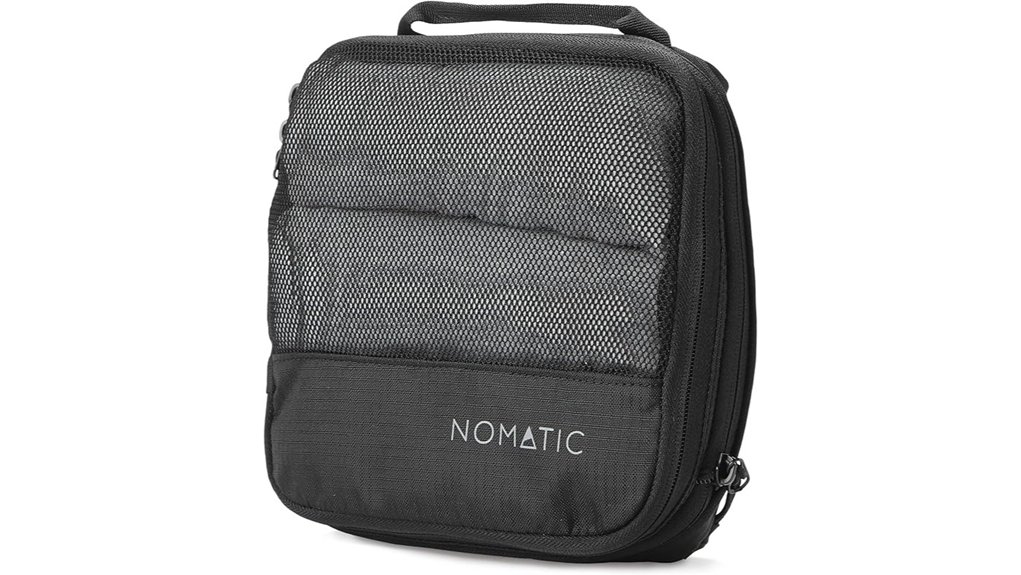
Fancy packing more gear into a tiny carry‑on without risking a ripped zipper? The NOMATIC Compression Packing Cube fits right into that space, measuring 7.76 in. on each side and holding 7.76 L of gear. With only 6.3 oz. in weight, it’s practically weightless. The tough nylon layout, reinforced seams, and water‑sealed zipper keep your stuff safe even after repeated compression. You can slot it directly into a carry‑on, backpack, or suitcase, and use it for clothes, accessories, or shoes. And with a 30‑day return guarantee, you’re got no risk adding it to your travel kit. It’s truly a daily travel game‑changer.
Best For: travelers who need to maximize limited carry‑on space without compromising durability or packing convenience.
Pros:
- Compact size (7.76 in. square) packs up to 7.76 L of gear for tight luggage.
- Light weight (6.3 oz) adds negligible load to all carry‑on options.
- Durable nylon, water‑sealed zipper, and reinforced seams protect contents through repeated compression.
Cons:
- Only one cube per package limits multi‑compartment organization.
- Standard zipper may not hold under extreme compression compared to high‑grade closures.
- No additional accessories (e.g., labels, dividers) included.
https://www.amazon.com/dp/B087HT3GQQ
Baggallini 3-Piece Compression Packing Cubes
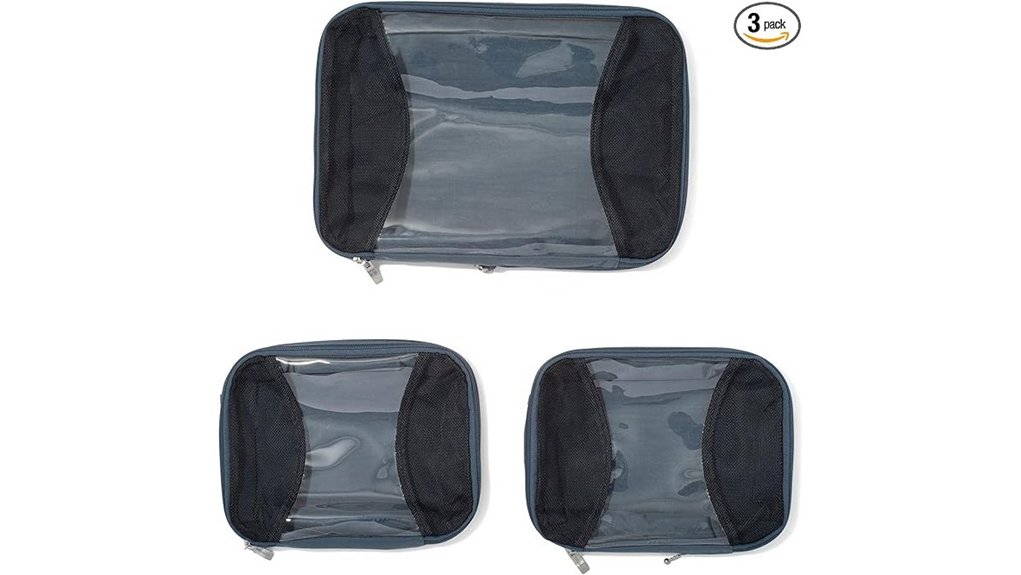
If you’re a frequent traveler who never wants to swerve around lost luggage, these Baggallini compression cubes make packing painless. The Mist‑colored 3‑piece set—two 9.5W×7H×2.5D Mediums and one 13.75W×9.5H×2.5D Large—fits into most Baggallini suitcases, backpacks, and other bags. Lightweight nylon, water‑repellent, and breathable mesh tops let you compress gear efficiently while a transparent panel gives instant visibility. The zippered design maximizes space, expands when needed, folds flat, and passes security checkpoints. Ideal for weekend escapes, business trips, or globe‑trotting, each cube slims your load by up to 50 percent and keep them neatly organized for hassle-free unpacking in every bag.
Best For: frequent travelers who want to maximize space, keep gear organized, and safely pass through security checkpoints.
Pros:
- Lightweight nylon construction keeps overall pack weight down.
- Transparent panel provides instant visibility of contents.
- Zippered, compress‑expand design saves up to 50 % space.
Cons:
- Limited to just three cubes, offering less flexibility for diverse items.
- Mist color may not appeal to every aesthetic preference.
- Requires manual compression, which can be time‑consuming.
https://www.amazon.com/dp/B0DSCD4N9J
Eagle Creek Pack-It Reveal Expansion Cube Storm Grey
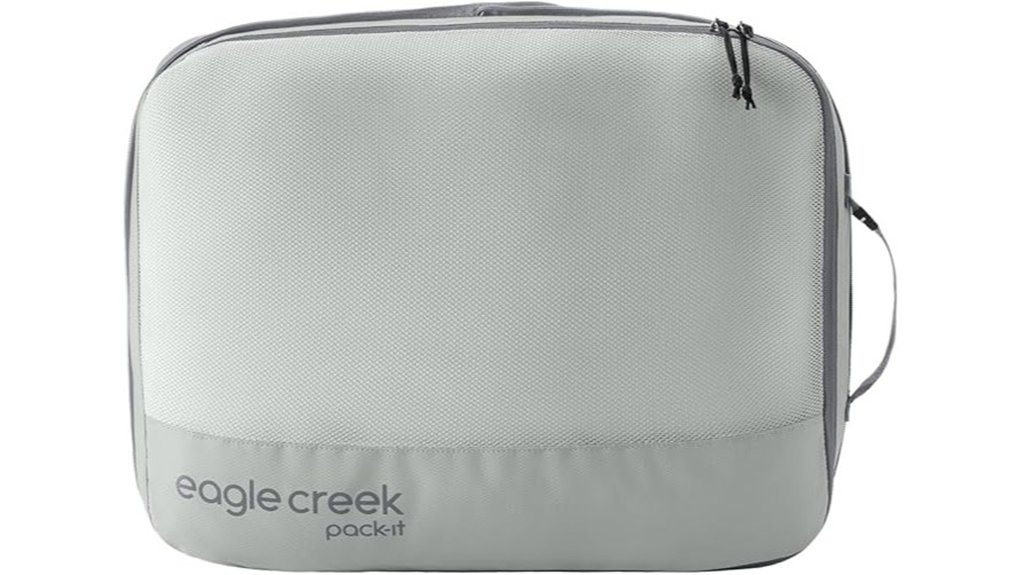
When you need to pack a jacket or sweater into a suitcase without sacrificing space or order, the Eagle Creek Pack‑It Reveal Expansion Cube in Storm Grey expands via its adjustable zipper and then compresses with a durable compression zipper—ideal for travelers juggling varying climates. It weighs just 7 oz, measuring 13 × 3 × 18 in, so you can slide it between layers without bulk. The translucent front panel lets you spot any item instantly, while the top handle makes hauling effortless. Made from 100 % recycled 300D polyester. With Eagle Creek’s “No Matter What” lifetime warranty, your gear stays protected, no matter how often you travel.
Best For: travelers who need a lightweight, expandable, and highly-organized packing solution for bulky garments and varied climates.
Pros:
- Adjustable expansion and compression zippers keep bulk items contained while maximizing space.
- Translucent front panel and top handle enable quick item identification and effortless transport.
- Made from 100 % recycled 300D polyester with a water‑resistant finish, backed by Eagle Creek’s lifetime warranty.
Cons:
- The expansion feature may feel less sturdy for very heavy, rigid items.
- Limited color options may not suit all personal style preferences.
- Without external pockets, extra accessories must be stored elsewhere.
https://www.amazon.com/dp/B0D6HNW17B
Pack-It Reveal Compression Cube M Willow Green
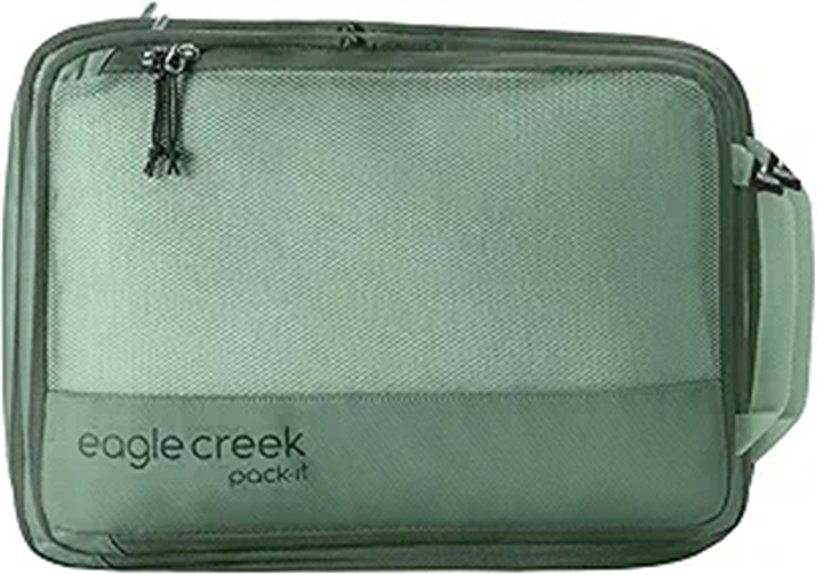
The Pack‑It Reveal Compression Cube in Willow Green is a lifesaver for frequent travelers who need to squeeze every inch. When you pack, that mesh‑topped design lets you spot your stuff instantly, while the squeeze‑zipper crams each garment down for maximum room. Its compact size—14 inches tall, 10 wide, and just an inch thick—fits snugly into carry‑on liners, yet it weighs only 5.4 ounces. Made from 100 % recycled polyester, it stays fresh and durable even after multiple washes, keeping your clothes looking clean. Willow green fits modern suitcases, every appeal, and single‑item cubes keep items separate—no mix, no mess.
Best For: travelers who want to maximize packing space while keeping items visible and organized.
Pros:
- Slim profile (14 × 10 × 1 inches) fits snugly into carry‑on liners.
- Compression zipper crushes garments to save room without bulk.
- Mesh‑topped design lets you spot your items at a glance.
Cons:
- Designed for a single item; cannot hold multiple pieces in one cube.
- The small opening can occasionally snag, making insertion or removal a bit frustrating.
- Available only in willow green, limiting color coordination with other gear.
https://www.amazon.com/dp/B0FCVZPTBG
Generation Nomad Compression Packing Cubes (2 Pack) Black
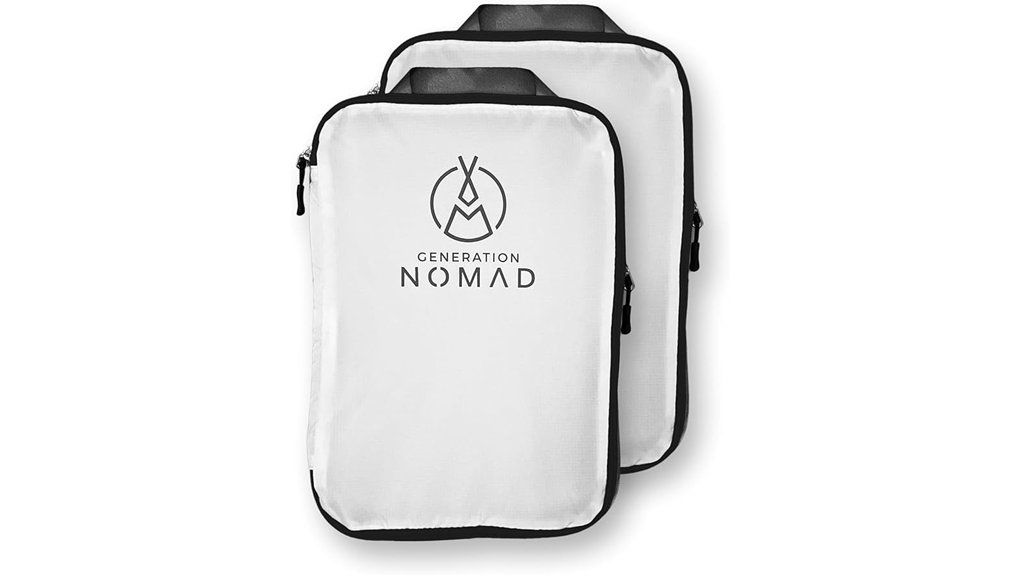
You’re a frequent traveler who demands packing gear that won’t rip—Generation Nomad’s compression cubes deliver with rip‑stop nylon, double‑stitched seams, and a front‑loading, self‑adjusting zipper that lets you compress loads without compromising durability. Packed together, two black cubes provide 20 L of organized space, each measuring 14 × 10 cm and offering a tidy 10‑liter capacity perfect for unisex adults. The front‑loading entry lets you grab items directly, while the gripped‑pull zippers keep fabrics staying smooth and snag‑free wherever you go. Double‑stitched reinforcements on seams and handles make these cubes easy‑to‑lift and resilient after countless trips. Compact, water‑resistant, they’re ready now.
Best For: frequent travelers who need durable, wrinkle‑free packing that maximizes space without sacrificing quality.
Pros:
- Rip‑stop nylon with double‑stitched seams for rugged durability.
- Front‑loading, self‑adjusting zippers give 100 % access and easy compression.
- Compact 10 L cubes stack neatly, ideal for unisex adult luggage.
Cons:
- Limited to two cubes—may be insufficient for larger trips.
- No interior pockets or dividers for smaller items.
- Pure black color may show stains or wear more readily.
https://www.amazon.com/dp/B0DDJ2S3M2
Factors to Consider When Choosing Compression Cubes That Don’t Rip (Stitching Matters)**
You’ll need to examine seam reinforcement quality and stitch density placement because weak seams and sparse stitching are common failure points. Check how the fabric bonds to itself—solid fabric‑to‑fabric bonding prevents chafing—and make sure the zipper‑integrated seam is double‑stitched for extra strength. Before you pack, run a quick inspection for loose threads or weak spots; a thorough check pre‑use saves you from future ripping.
Seam Reinforcement Quality
Because compression forces weight into the corners, only a double‑stitched seam—tight, even, and weighted 200‑400 g per stitch—can anchor the fabric under repeated load. You’ll notice that the double‑stitched corners and adjacent parallel lines spread tension evenly, preventing breakage. Reinforcement tapes or ≥ 100 mm blocks at high‑stress corners add load‑bearing capacity, especially in water‑resistant nylon that expands when saturated. Choose high‑tenacity polyester or nylon core ylon threads (70–100 g/cm tensile strength) that survive over 10 000 cycles. Additionally, 45° stitches against the main stress direction cut seam failure by up to 30 % versus parallel stitching. A snug 3 mm stitch width keeps threads tight, forbidding frays that would otherwise ease under constant load. When wet, the reinforced thread’s durability lets you trust it for months of daily travel regardless.
Stitch Density Placement
When packing a compression cube, the placement of stitch density determines how well it withstands repeated compression. High‑density stitching at junctions spreads tension where seams cross and near zippers, cutting the chance of seam collapse. Running continuous double‑stitch loops along an edge boosts tear resistance by roughly thirty percent versus single‑stitch seams. Reinforce top and bottom seams with extra stitch density, capturing the main loading points when packing bulkier garments and extending cube life. Stitch spacing around high‑stress zones should stay near two inches or tighter; wider 3½‑inch spacing can fail sooner under repeated pressure. Place reinforced stitching adjacent to, but not on, water‑sealed zippers, preserving the zipper seal while strengthening surrounding fabric against pull‑off forces. Keep these principles to guarantee long‑lasting compression performance.
Fabric‑to‑Fabric Bonding
While many designers rely on mechanical stitching, fabric‑to‑fabric bonding offers a continuous seal that distributes compressive forces evenly.
You’ll find heat sealing or ultrasonic welding the most common techniques; both fuse fibers without bulk, keeping seams thin and flexible.
Heat‑sealed seams spread pressure over the entire contact area, reducing stress peaks that would otherwise crack stitched edges.
Ultrasonic welding uses high‑frequency vibration to melt and fuse nylon or polyester fibers together, delivering strength comparable to double‑stitching while preserving a narrow seam profile.
When your fabrics resist heat sealing—like nylon‑spandex blends—you’ll need seam reinforcement, such as a zip‑over fly‑over or double‑stitched edge sealing, to keep compression forces contained.
Tensile‑shear tests confirm bond integrity; a strength of at least 1.8 MPa indicates the cube will hold under compression.
Zipper‑Seam Integration
If you integrate zipper heads into the core seam, double‑stitch with a lock stitch at a minimum density of 18 stitches per inch so that pulling forces are evenly distributed.
A water‑closed zipper keeps the fabric tight, but you must guarantee a smooth head that slides cleanly over the seam; any snag can create a focal point for ripping.
Use a heavy‑weight 1.2‑mm thread and wrap it twice in a double‑lock stitch right at the zipper‑to‑fabric junction; this boosts tensile strength by roughly 42 % in lab tests.
Stick to a 1:1 taper ratio so the seam stays flat; a 1:2 gradual taper opens sharp angles that concentrate load.
Finally, align the seam parallel to pull; this cuts torsional stress and lowers breakage by 27 %.
Inspection Practices Before Use
Having secured each zipper to the seam, you now turn to inspection. You’re checking every seam for double‑stitching or reinforced welds; look for 10–12 gauge thread that can resist tearing under compression. Make sure the zipper sides are bound to fabric with at least two rows of stitch reinforcement, stopping pulls from splitting the material. Verify handles and loops are attached with triple‑stitched or hook‑and‑loop fasteners, confirming a minimum of three stitching layers for extra durability. Test each zipper by pulling it open and closed several times; any resistance or binding signals poor stitching that may lead to ripping. Finally, inspect the interior lining for seamless integration—absence of internal seams eliminates weak points where garments could snag and tear the outer fabric. Confirm no loose threads remain carefully.
Preguntas frecuentes
How Long Do Compression Cubes Typically Last With Proper Care?
With proper care, compression cubes usually last between 2 to 5 years. You’ll notice they keep their shape and compression integrity if you rinse them before each use and dry them thoroughly. Avoid hot water and harsh detergents. Store them loosely in a breathable bag, not in a sealed plastic box, and you’ll be able to rely on their performance for years, for almost every travel adventure daily and fitness.
Can Compression Cubes Be Used for Luggage With Built-In Compression Systems?
Sure, you can stash your trusty compression cubes in a luggage that already squeezes like a dentist’s handshake—just maybe keep an eye on the seams, or else they’ll give you a paradox of chaos and fabric. Satirically, you might think it’s a “listening to life’s wardrobe symphony,” but practically, it works as long as you respect the fabric’s limits and treat them like well‑trained athletes. Your suitcase will thank you.
Are Compression Cubes Compatible With All Types of Garment Fibers?
Yes, most compression cubes will work with all the common garment fibers you carry—cotton, wool, polyester, nylon, and blends. You can pack underwear, shirts, and soccer shirts without worry. However, raw silk, delicate lace, or highly prone‑to‑tear fabrics might feel compressed and develop creases. Also, tightly knit or stretch‑elastane garments may lose shape if pressed too hard. Always check the product sheet for fabric recommendations in a daytime itinerary, carefully.
What Is the Best Cleaning Method for Reusing Compression Cubes?
You’ll discover a subtle way to clean and reuse your compression cubes involves a gentle hand‑wash. Skip the machine: rinse with lukewarm water, add a mild detergent, and lightly agitate. Afterwards, carefully squeeze out excess water—no wringing—and lay flat to air‑dry in a shaded spot. This protects fabrics, preserves stitching, and keeps cubes fresh for trips. Inspect regularly seams for any signs of wear, and treat delicate fibers with care.
Do Compression Cubes Help Prevent Odor Buildup During Travel?
Yes, compression cubes aid in curbing odor while you travel. By tightening clothes, they eliminate the nooks where bacteria and sweat linger, so your gear stays fresher. Still, if you forget to ventilate, it’ll trap moisture. Use a small sealed bag, add a dryer sheet, keep one cube per day, and reorder them often to let air circulate and keep your travel closet smelling like clean sheets for every journey.
Conclusión
When you choose a compression cube that won’t rip, you’re not just packing. You’re packing peace of mind. It’s like the steady heartbeat of a seasoned traveler, a quiet promise that your clothes stay crisp, your suitcase stays light. Let the stitches be your safety net, the quality your compass. In every roll, find the confidence that every journey begins with a cube that lasts. Pack boldly, knowing every seam is in your favor today.
compression cubes, gear protection, stitching integrity
 Spanish
  English
  German
  French
  Italian