
Blister Prevention (Tape, Patches, and Balms) for Pain‑Free Feet

Introducing Maria, our meticulous planner and talented visual storyteller. She has a knack for discovering those hidden gems, chic boutique spots, and charming little cafes that add a touch of elegance to every journey. With her keen eye for photography and her passion for travel, Maria will transport you to the most enchanting corners of the world, inspiring you to explore new places, one picture-perfect destination at a time.
If you’re tackling long hikes, start with pre‑cut KT strips—they’re instant, skin‑friendly, and keep blisters at bay. For wet conditions, choose hydrocolloid waterproof pads that stay sealed and cushion with gel, though they’re tricky on oily skin. Foam tape adds softness and breathability, but a roll may run out. a balm keeps skin dry, and moleskin pads fit toes and heels. Curious about sizing, layering, and when to switch? You’ll soon discover the right mix.
Principaux enseignements
- Opt for pre‑cut blister tapes: synthetic, fray‑free, skin‑friendly adhesive; convenient for instant use but may exhaust after multi‑day hikes.
- Hydrocolloid waterproof bandages keep sweat, dirt, and moisture out, provide a moist healing environment; clean skin beforehand for best adhesion.
- Foam tape delivers cushioning and breathability; stretchable width keeps it in place, but replace after heavy use due to single roll per pack.
- Body Glide anti‑blister balm forms a clear, non‑greasy film that stays under shoes, but needs re‑application after intense sweating.
- Moleskin blister pads offer latex‑free flannel with multiple shapes to relieve pressure points; residue‑free removal when soaked lightly.
KT Blister Prevention Tape – 30 Precut Strips
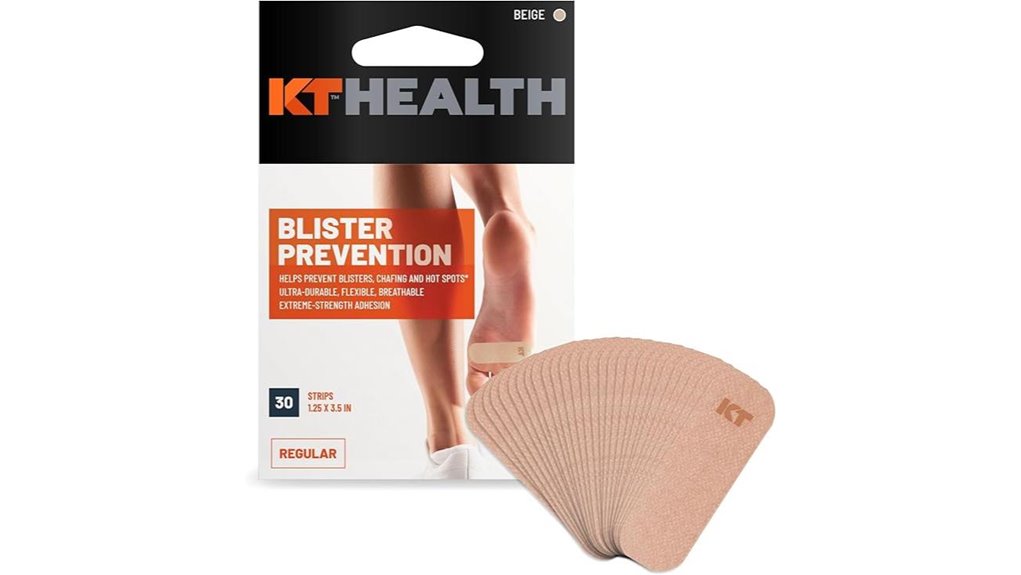
If you’re a runner, hiker, or athlete who battles blister‑prone skin, KT Blister Prevention Tape gives you a fast, reliable solution—each pack holds 30 pre‑cut strips that fit right where the skin’s most vulnerable, so you can keep moving without fraying or scissor‑cutting. You’ll love the high‑quality synthetic non‑woven fabric and rounded edges that keep the tape in place without tearing. The strong, skin‑friendly adhesive stays on through intense activity, guarding against blisters, chafing, and hot spots. Dermatologist‑tested, it’s safe for all skin types, so you can focus on running, hiking, or training for any adventure, no worries today.
Best For: runners, hikers, and athletes prone to blisters who need a quick, pre‑cut tape solution that stays on during intense activity.
Pros:
- Pre‑cut 30 strips eliminate scissors and allow instant application on blister‑prone areas.
- High‑quality synthetic non‑woven fabric with rounded edges prevents fraying and enhances comfort.
- Dermatologist‑tested, skin‑friendly adhesive keeps tape in place through vigorous movement.
Cons:
- Limited to 30 strips per pack, which may be insufficient for extended multi‑day hikes.
- Adhesion can be weaker on very sweaty or wet skin, requiring re‑application.
- If removed too quickly or improperly, a small amount of residue may remain on sensitive skin.
https://www.amazon.com/dp/B07GKFSM2Q
KT Health Blister Prevention Tape – 30 Strips
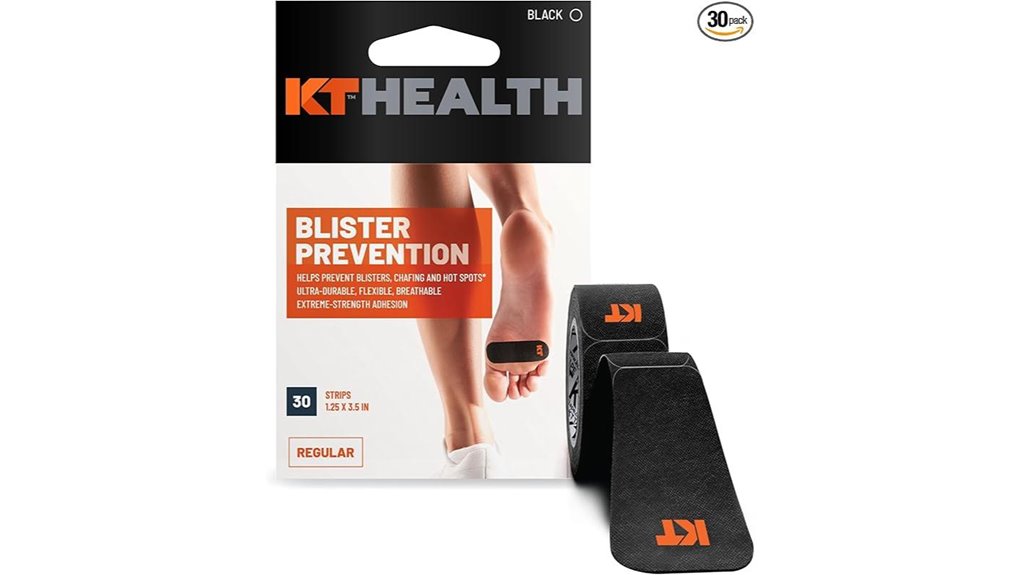
Designed for athletes and outdoor enthusiasts, the KT Health Blister Prevention Tape delivers 30 pre‑cut strips that let you quickly secure blister‑prone areas without scissors, ensuring you’ll stay pain‑free during intense movement on trail. Made from 100 % synthetic non‑woven fibers, the tape’s base resists tearing on rugged trails. Its adhesive grips, keeping the strip in place through every stride, while the rounded edges prevent fraying and enhance skin contact. Because the strips target blister sites, you skip the hassle of scissors. Dermatologist‑tested and safe for all skin types, these strips reliably shield against chafing, hot spots, and blister formation.
Best For: athletes and outdoor enthusiasts who need quick, blister‑free protection on rugged trails.
Pros:
- Pre‑cut 30 strips eliminate the need for scissors, saving time on the trail.
- Strong, long‑lasting adhesive keeps the tape in place through intense movement.
- Rounded edges and dermatologist testing ensure comfort and safe use on all skin types.
Cons:
- Limited to 30 strips per box, which may run out quickly on multi‑day trips.
- Synthetic non‑woven fibers may feel less breathable than natural materials.
- Designed specifically for common blister sites; less flexible for unusual pressure points.
https://www.amazon.com/dp/B076SBWV7S
21PCS Hydrocolloid Waterproof Blister Prevention Bandages
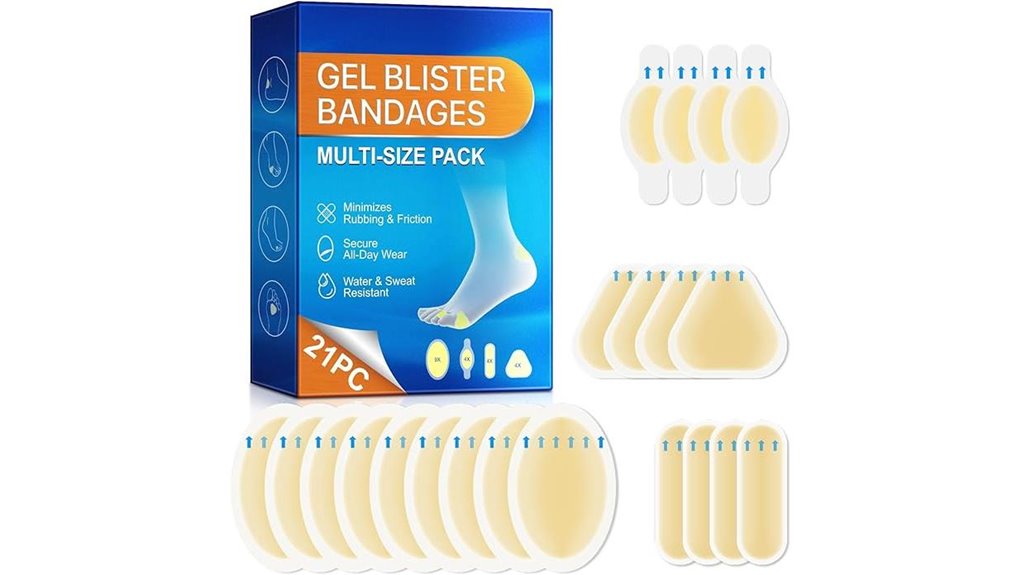
Runners, hikers, dancers, and workers who spend long hours on their feet will appreciate these 21‑piece hydrocolloid bandages: ultra‑thin, skin‑toned, and 100 % waterproof, they keep sweat and dirt out while creating a friction‑reducing barrier that keeps blisters from forming.
Clean your feet, peel the backing, and press each bandage onto the skin for at least five seconds. The hydrocolloid core absorbs moisture, cushions any developing blister, and creates a moist healing environment that speeds recovery and lowers infection risk. With circles, rectangles, and heel‑specific shapes, you can target spots—between toes, ankles, heels—without bulk. Wear them for work, stay blister‑free.
Best For: runners, hikers, dancers, and anyone who spends long hours on their feet and needs a blister‑free solution.
Pros:
- 100 % waterproof, sweat‑proof, and dirt‑proof for all‑weather use.
- Ultra‑thin, skin‑toned design stays virtually invisible under any footwear.
- Hydrocolloid gel core promotes moist healing and quick recovery.
Cons:
- May not adhere well to extremely sweaty or oily skin without prior cleaning.
- The variety of shapes may be confusing for first‑time users.
- Slightly more expensive than generic adhesive bandages.
https://www.amazon.com/dp/B0FQT4ZNYD
Nexcare Blister Prevention Waterproof Foam Tape 1x5yds
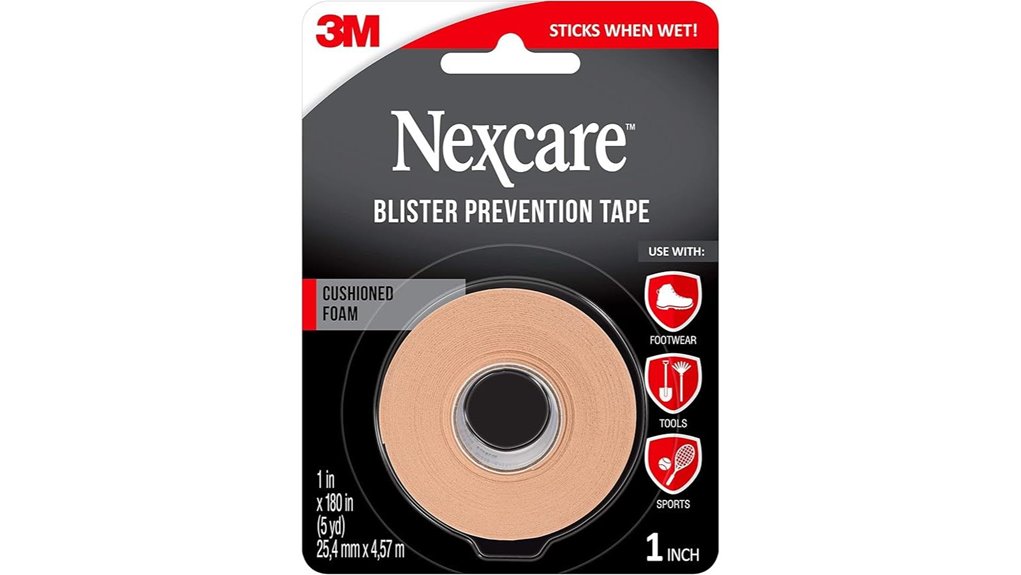
You’ll appreciate how this roll of Nexcare Blister Prevention Foam Tape stays firmly on your skin even during intense activity, thanks to its waterproof latex‑free adhesive. With a 1‑inch width and five yards, you cover multiple blisters on palms, fingers, heels, or toes. Soft foam inserts cushion and protect, while the breathable backing keeps skin dry even when sweaty. The flexible design stretches with each movement, preventing irritation or tearing. Because the adhesive is latex‑free, you’re less likely to develop an allergic reaction, safe for sensitive skin. Store the roll in your first‑aid kit. Nexcare’s brand delivers reliable performance.
Best For: athletes, outdoor workers, and anyone prone to blisters who needs reliable, breathable, waterproof protection without latex allergies.
Pros:
- Waterproof latex‑free adhesive stays on through sweat and activity
- Soft foam inserts cushion blisters and keep skin dry with breathable backing
- Flexible 1‑inch width stretches with fingers, toes, and heels for comfortable fit
Cons:
- Limited to one roll per pack, which may require frequent replacement for heavy use
- 1‑inch width may be too narrow for larger blisters or broader skin areas
- Slightly higher cost compared to non‑foam blister bandages or generic tapes
https://www.amazon.com/dp/B07SB24DVJ
Body Glide Anti-Blister Balm for Feet (0.8oz)
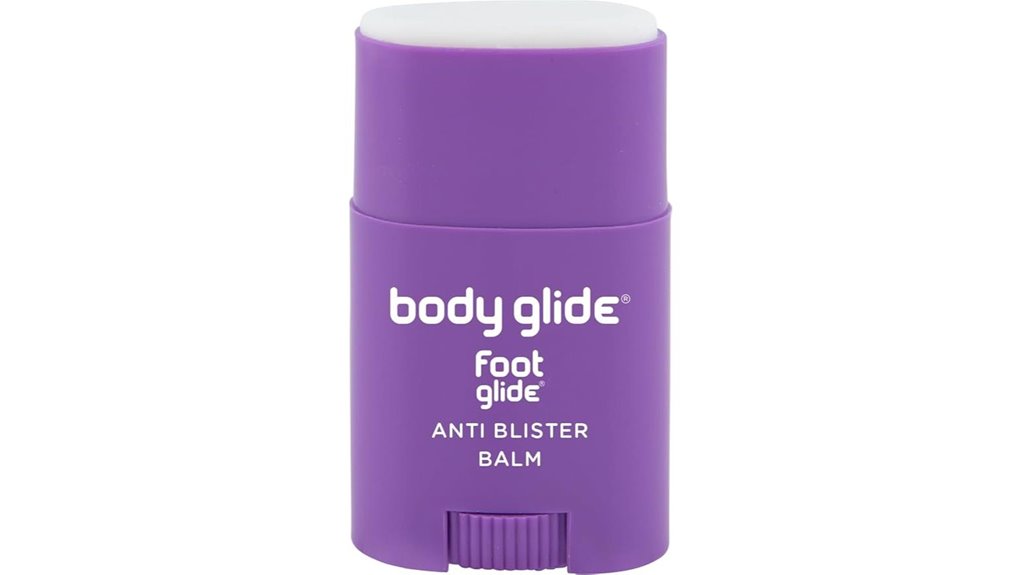
If you’re a hiker, backpacker, or athlete who spends long hours on your feet, you’ll appreciate the 0.8‑oz Body Glide Anti‑Blister Balm’s lightweight, invisible film that dries quickly and blocks friction from socks, straps, or seams.
Apply a thin layer to heels, toes, ankles, arches, soles, and ball of foot before each outing. Its clean, plant‑derived formula lets shoes breathe. Infused with Vitamin A & C, it reduces inflammation and repairs dry skin. Vegan, allergen‑free, never tested on animals, it’s a responsible choice for outdoor adventurers. Whether hiking, cycling, or training, Body Glide keeps feet pain‑free, ready for daily walking or sports.
Best For: active hikers, runners, and anyone spending long hours on their feet who needs blister prevention and quick‑dry protection.
Pros:
- Non‑greasy, invisible film that dries quickly and stays clear under shoes.
- Plant‑derived, vegan, allergen‑free formula with Vitamin A & C for soothing and repairing dry skin.
- Lightweight 0.8 oz vial that fits easily in a pocket or backpack for on‑the‑go application.
Cons:
- Small 0.8 oz size can run out sooner than larger tubs, especially on multi‑day trips.
- No scent or fragrance, which might be a downside for users preferring a pleasant smell.
- Requires reapplication after heavy sweating or prolonged use to maintain maximum protection.
https://www.amazon.com/dp/B00115UN9Q
32-Piece Moleskin Blister Pads for Feet
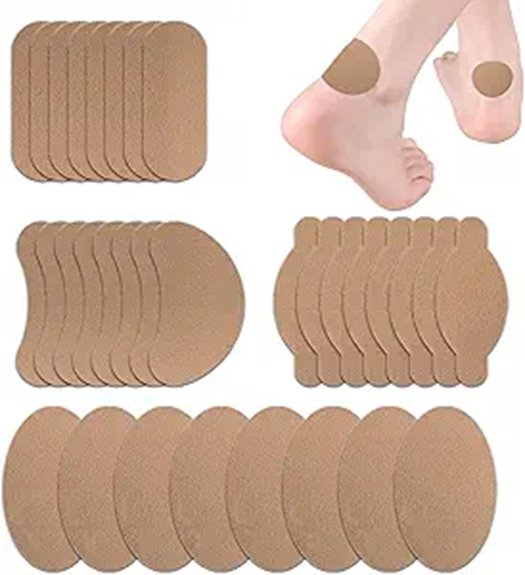
Whether you’re a commuter, a weekend hiker, or a dancer, this 32‑piece moleskin blister pad set gives you the exact shape and size for every blister‑prone spot. Each pad feels soft, latex‑free, and pre‑cut for placement on toes, heels, or arches. The premium flannel cushions while the adhesive locks in, so you keep walking without slipping. With four shapes—oval, long strip, watch‑shaped, crescent—you can match every pressure point, whether it’s a boot, high‑heel or ballet flat. These pads cut friction, soothe calluses bunions, stay secure through sweat. When you’re done, just soak lightly and peel quickly away residue‑free today.
Best For: anyone who spends long hours walking, hiking, or dancing and needs reliable, blister‑protective pads for feet, toes, and heels.
Pros:
- Soft, latex‑free flannel material that’s gentle on skin
- Four pre‑cut shapes (oval, long strip, watch‑shaped, crescent) for precise coverage
- Strong adhesive holds during sweat and movement, with residue‑free removal
Cons:
- Limited to small‑to‑medium blisters; may not cover larger wounds
- Adhesive can weaken after prolonged exposure to excessive moisture
- Packaging is bulkier for those who only need a few pads at a time
https://www.amazon.com/dp/B0FT6R1Z5X
Moleskin Feet Blister Prevention 24ct Padding for Shoes
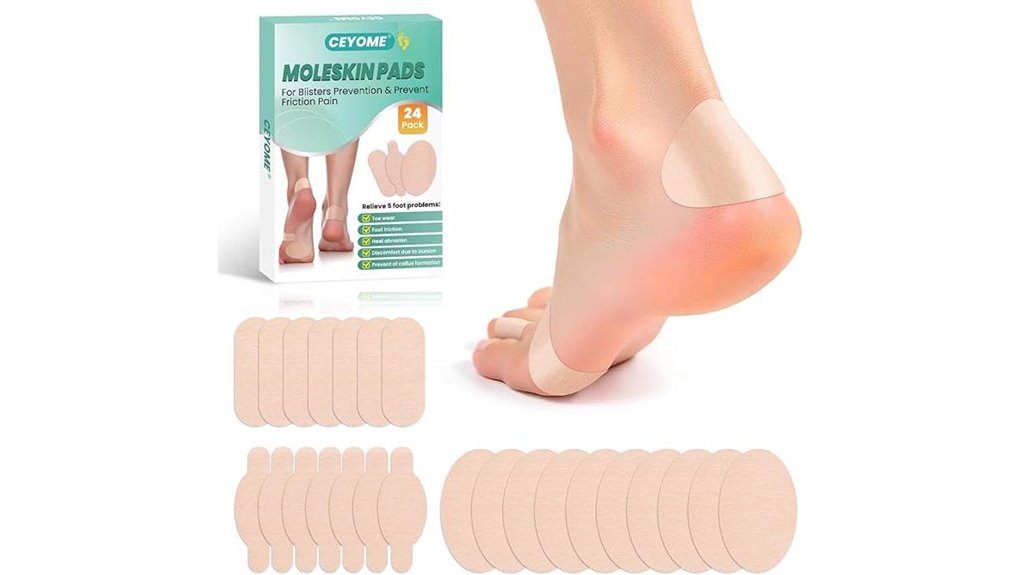
For anyone who spends hours on the move—whether you’re a marathoner, a long‑haul driver, or a weekend hiker—this 24‑piece pack of adhesive moleskin pads delivers instant, friction‑reducing protection. They clamp onto your heel, forefoot, or toes, slashing sliding and stopping blisters before they start. The pads cling strongly through long walks, yet peel cleanly with a quick soak, leaving no sticky residue. Lightweight and ultra‑thin, they breathe and fit high heels, sports shoes, or boots without adding bulk. Portable and travel‑friendly, you can swap a pad daily or share it with a buddy, keeping feet pain‑free wherever you go.
Best For: anyone who spends long hours on their feet—such as runners, hikers, long‑haul drivers, or commuters—seeking quick, friction‑reducing blister protection.
Pros:
- Rapid friction reduction, preventing blisters on the first use.
- Long‑lasting adhesive that stays put through extended walking or movement.
- Ultra‑thin, breathable design fits comfortably in high heels, sports shoes, and boots.
Cons:
- Requires daily replacement for optimal effectiveness, adding extra cost.
- May not adhere well to extremely sweaty or wet feet.
- Limited to a 24‑piece pack, which could be insufficient for frequent travelers.
https://www.amazon.com/dp/B0FW4SQNXH
ENGO Blister Prevention Patches Oval Patches (Starter, 6, Count)
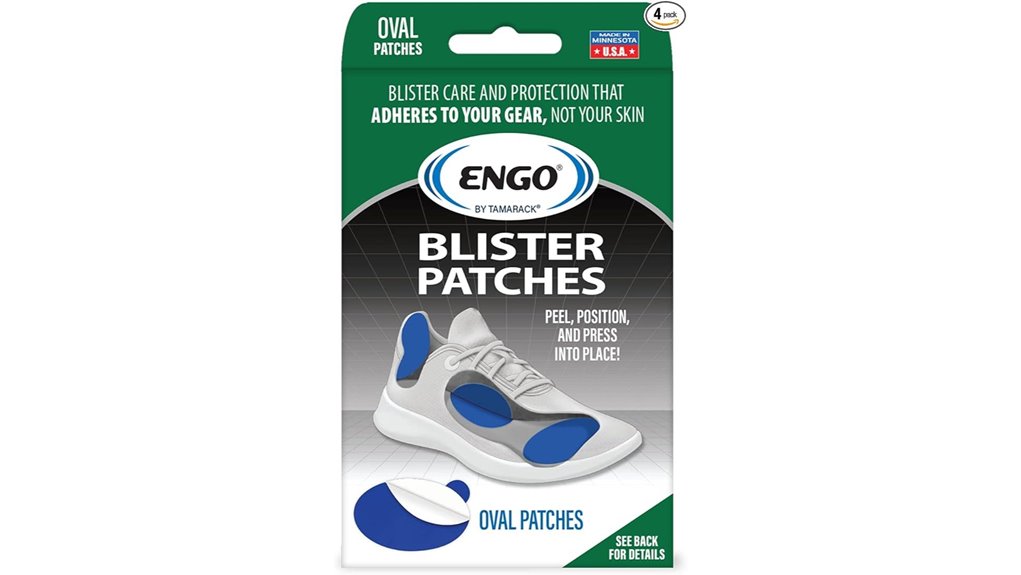
When you’re gearing up for a long run or a weekend hike, the ENGO Blister Prevention Patches give you a lightweight, friction‑reducing shield that fits right where it matters. These oval patches come in a starter pack of six—four large, two small—and instantly cut friction, so you’ll see blisters or calluses form. Stick them inside shoe type—athletic, high‑heel, orthotic, or ski boot—and you’ll feel the difference away. At 0.015 inches thick, they’re noticeable yet last up to 300 miles and resist water. The easy‑trim design lets you shape each patch to your foot, so you stay comfortable all day.
Best For: people who wear high‑impact footwear and need quick, long‑lasting blister protection.
Pros:
- Ultra‑thin (0.015″) design that doesn’t alter shoe fit
- Self‑adhesive and water‑resistant, lasting up to 300 miles
- Versatile: works in sneakers, high‑heels, orthotic braces, and even ski boots
Cons:
- Starter pack may run out quickly for heavy‑use athletes
- Requires trimming for precise fit, which can be time‑consuming
- Not intended for severe skin conditions that need medical treatment
https://www.amazon.com/dp/B003URZNW0
KT Health Waterproof Blister Hydrocolloid Patch Pack
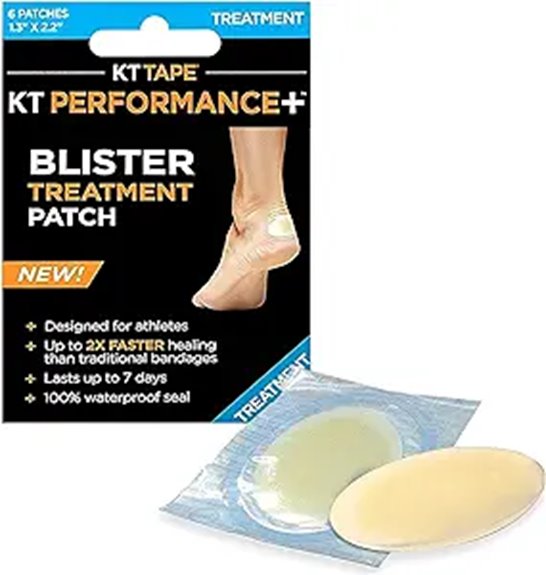
If you’re a runner who pushes miles in the rain, the KT Health Patch Pack’s 100 % waterproof hydrocolloid gel keeps your blisters protected and heals twice as fast as a dry bandage—so you’ll keep moving pain‑free. These patches shield feet during training, hiking, and competition, staying intact in wet conditions. They create a moist environment that cuts healing time by half, reduces scarring, and lets you return to activity within a week. Conforming to skin, the patches keep friction low and stay in place for seven days. Hypoallergenic, rubber‑and‑latex‑free, they’re safe for most skin types. The pack includes six patches.
Best For: runners, hikers, athletes, and anyone who experiences blisters in wet or high‑friction conditions.
Pros:
- 100 % waterproof hydrocolloid gel that shields blisters and speeds healing up to twice as fast.
- Creates a moist environment to reduce scarring and allows a full return to activity within seven days.
- Non‑sticky, hypoallergenic design stays in place for an entire week without rubbing off.
Cons:
- The pack contains only six patches, limiting coverage for frequent blister sufferers.
- Fixed patch sizes may not accommodate very large or oddly shaped blisters.
- The adhesive can be difficult to apply on extremely sweaty feet, potentially leading to detachment.
https://www.amazon.com/dp/B076SV36ZQ
30ct Moleskin Adhesive Blister Pads
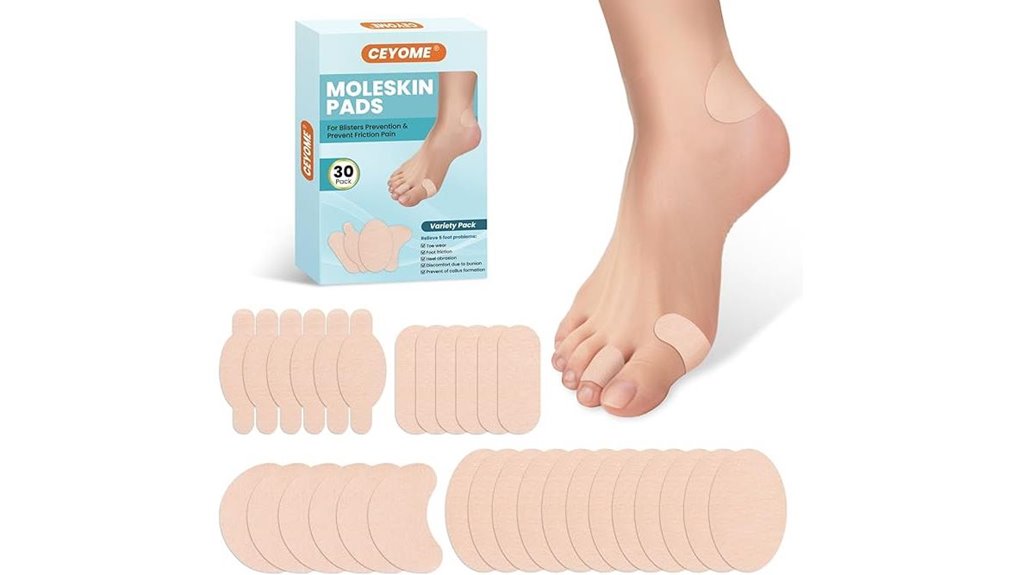
These 30‑count Moleskin adhesive blister pads cut friction and soothe pain for anyone battling blisters from new shoes or long walks, making them ideal for hikers, runners, and commuters alike.
You stick a pad to the sore spot before you lace up; it’s strong, long‑lasting adhesive keeps it in place through every step, even during vigorous hikes or office walks.
When you finally need to remove it, a quick light soaking lets it peel cleanly, leaving no sticky residue behind.
With 30 shaped pads—heel, forefoot, toes, and wide—your feet get proper coverage for each shoe type or foot shape.
Best For: hikers, runners, and commuters who battle blisters from new shoes or long walks.
Pros:
- Cuts friction and soothes pain effectively
- Strong, long‑lasting adhesion keeps pads in place during activity
- Compact 30‑count pack with four shapes fits a wide range of shoe types and foot shapes
Cons:
- Adhesive may be difficult to remove without soaking
- Ultra‑thin design may not provide full protection against heavy impact or extreme abrasion
- Not intended for use on other parts of the body outside the feet
https://www.amazon.com/dp/B0FDQ88H9P
Precut Blister Prevention Tape, 100pcs, 5 Colors
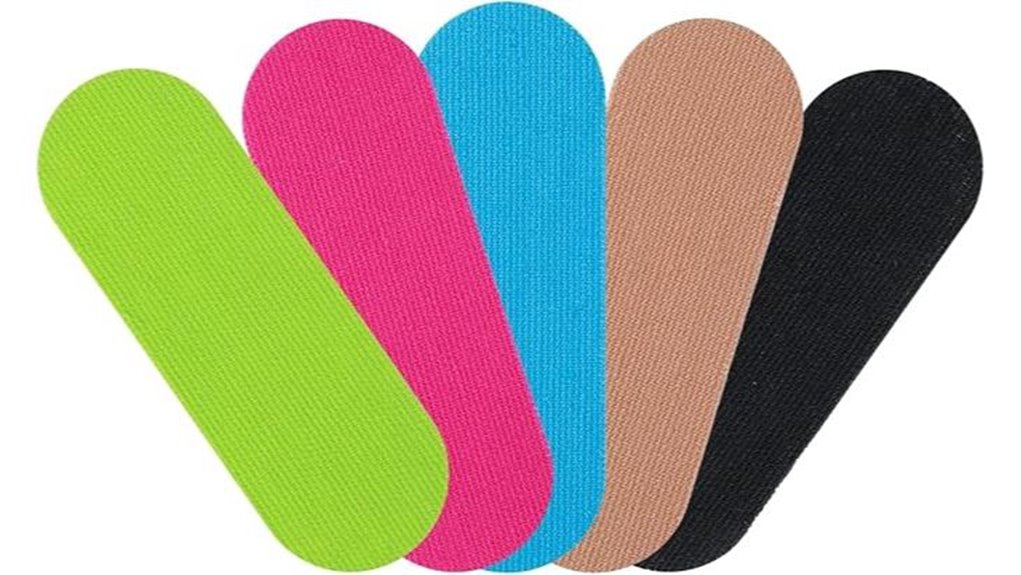
For athletes who spend hours on their feet, these 100 precut blister prevention tapes—each 1.2 inches wide—offer breathable, sweat‑resistant protection that stays put during any activity. Packaged in five colors, each set gives 20 strips, so you can mix shades for toes, heels, or socks. The 3 cm × 9 cm cotton‑spandex blend keeps moisture out and lets skin breathe, while the waterproof adhesive holds through runs, hikes, and showers. The built‑in guide line lets you peel away without scissors, and baby oil removes stubborn residue. You can apply them directly to skin, socks, or shoes—perfect for new shoes, travel, or everyday use.
Best For: athletes, travelers, and anyone who spends hours on their feet and needs reliable blister prevention for heels, toes, or friction‑prone areas.
Pros:
- Breathable cotton‑spandex blend keeps moisture out while staying flexible.
- Waterproof adhesive holds during runs, hikes, and showers without leaving residue.
- Five color options and built‑in guide line make application fast and hassle‑free.
Cons:
- Adhesive may cause slight skin irritation for highly sensitive skin.
- Limited to 1.2 in width; may not cover larger areas without overlap.
- Baby oil may be required for stubborn removal, adding extra steps.
https://www.amazon.com/dp/B0FKNBQ2RS
OK TAPE Pre-Cut Blister Bandages for Feet
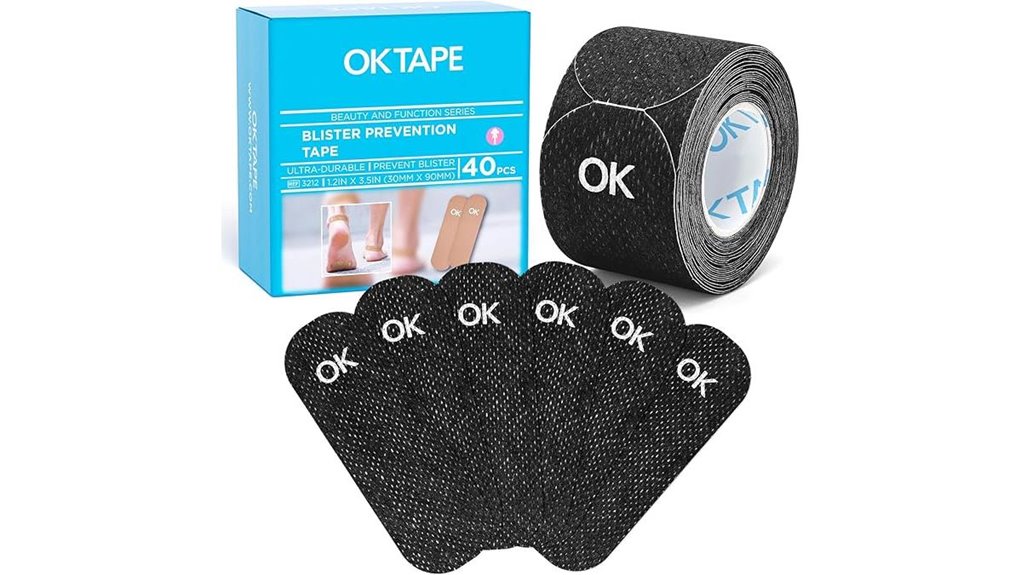
Because the OK TAPE pre‑cut blister bandages measure 1.2 in by 3.5 in, you’ll be able to apply them straight to the heel, toes, or foot side without trimming. They’re hypoallergenic, latex‑free, and leave no sticky residue, so you’ll keep your skin calm even after long hikes. Place one over each high‑friction zone—heel, toe, or side—to cut rubbing and stop blisters before they start. Its synthetic shell resists wear, letting you walk, run, or stand for hours without the bandage falling off. Apply it once daily, enjoy smoother steps—feet stay blister‑free, comfy, and always pain‑free. Stay blister‑free, and feel lighter on feet.
Best For: hikers, runners, or anyone who spends long hours walking, standing, or hiking and needs blister prevention on heels, toes, and sides.
Pros:
- Easy to apply with no trimming needed, saving time on the trail.
- Hypoallergenic, latex‑free design leaves no sticky residue and keeps skin calm.
- Durable synthetic shell stays on through long walks, runs, or extended standing.
Cons:
- May be too large for smaller feet or toes, requiring careful placement.
- Some users may find the pre‑cut size less customizable for unique foot shapes.
- Not reusable; each bandage is single‑use, requiring frequent replacement.
https://www.amazon.com/dp/B0D3WYVFWN
Dr. Frederick’s Water-Resistant Better Blister Bandages (12ct)
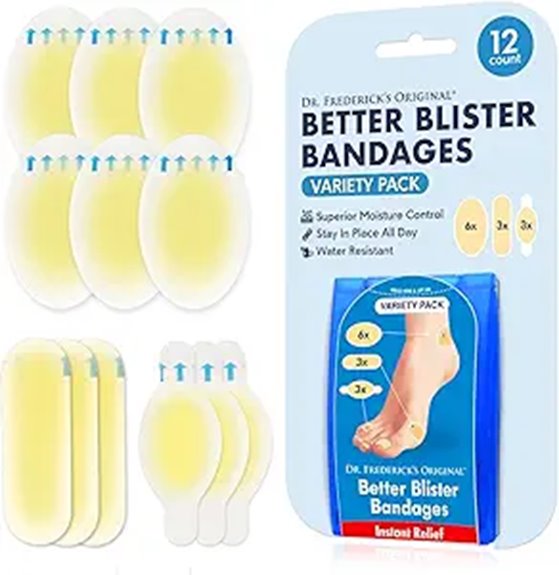
If you’re an avid hiker or long‑distance runner who battles blister‑prone feet, this water‑resistant, hydrocolloid bandage set offers 40 % more cushioning than most pads, so you’ll keep moving comfortably. Pack of 12 keeps your heels, toes, and hotspots protected during walks, hikes, or even a golf swing. The ultra‑sticky film bonds firmly to clean, dry skin, staying in place until moisture is absorbed, shielding against sweat, germs, and friction. Apply each pad to a clean spot; it seals and absorbs fluid, preventing irritation. Dr. Frederick guarantees satisfaction—if a bandage falls short, they’ll fix it. They’ll replace it quickly, assured.
Best For: avid hikers, long‑distance runners, and anyone needing extra blister protection on hot‑spot areas during walking, hiking, dancing, or golfing.
Pros:
- 40 % more cushioning than most hydrocolloid pads for superior blister prevention and pain relief.
- Water‑resistant, ultra‑sticky film keeps the bandage in place even with sweat or friction.
- 12‑pack gives long‑term use and convenient replacement for everyday activities.
Cons:
- Requires clean, dry skin for best adhesion; may be difficult in wet conditions.
- Slightly bulkier due to extra cushioning, possibly affecting fit in tight shoes.
- Single‑use pads must be replaced after fluid absorption, which can add cost for frequent use.
https://www.amazon.com/dp/B07LCRX2M7
Honoson 110 Moleskin Blister Pads – 10 Sheets
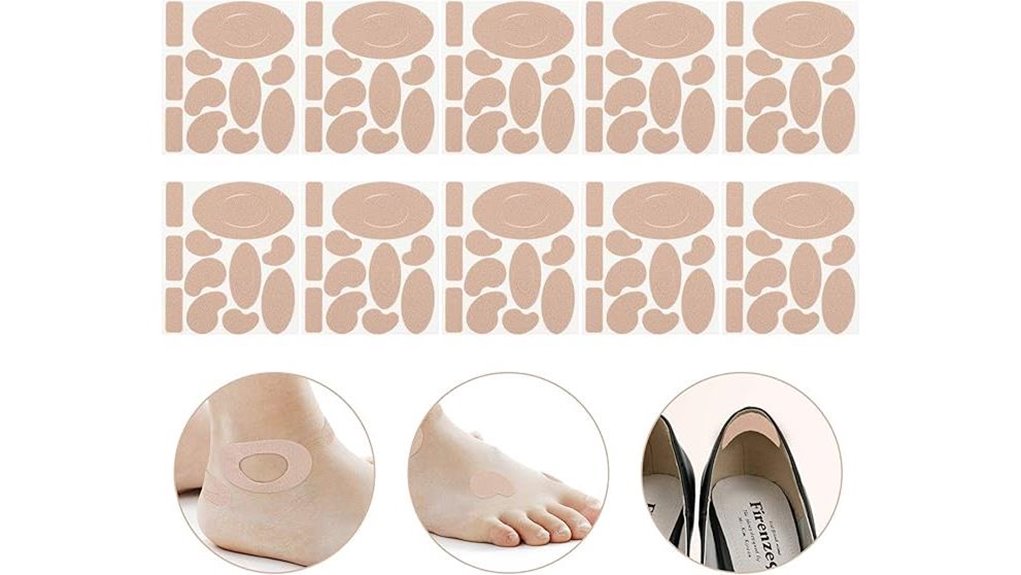
When you lace up for a long hike, the Honoson 110 Moleskin Blister Pads instantly give you a cushioned shield against friction. Soft moleskin wraps your foot, cutting friction and easing discomfort from new shoes or long walks. The pack holds 110 pads in ten sheets—eleven per sheet—each shaped for toes, heels, or arches. Apply a pad by placing it on a dry spot; the open‑design backing keeps it secure without sticky residue. Its flannel layer shields skin from dust, and you’ll also slide it over a blister for clean protection. Feel confident; adhesive stays firm all day today.
Best For: hikers, runners, or anyone prone to foot friction and blisters during extended wear.
Pros:
- Soft, cushioned moleskin that reduces friction and eases discomfort.
- Adhesive backing keeps pads secure without sticky residue, suitable for long activity.
- 110 pads in ten sheets, each shaped for toes, heels, or arches, providing plenty of options.
Cons:
- Pads are intended only for foot use; not suitable for other body areas.
- The open‑design backing may not hold as firmly in very sweaty or wet conditions.
- Bulkier flannel layer can be heavy for very lightweight, minimalist shoe users.
https://www.amazon.com/dp/B07RLX2F8H
OK TAPE Blister Prevention Moleskin, 40 Precut Strips
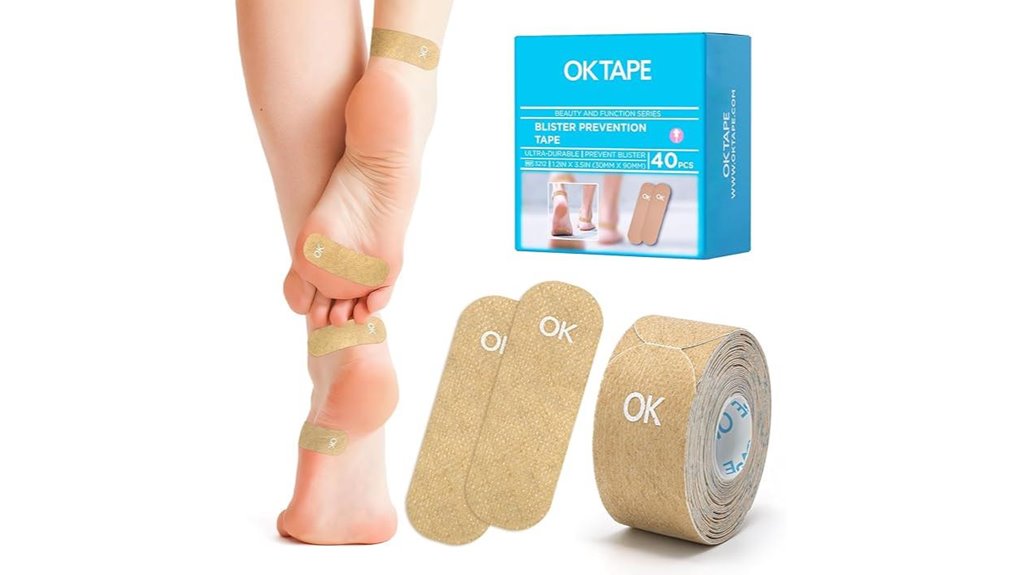
For athletes, hikers, and anyone who breaks in a new pair of shoes, the OK TAPE Blister Prevention Moleskin gives you instant, no‑residue protection. Each 1.2 in × 3.5 in strip is pre‑cut and beige, matching your shoe’s tone. Tiny air holes reduce pressure and friction, shielding corns, calluses, bunions, and sore heels. The super‑sticky, water‑resistant adhesive stays on through sweat, showers, running, and climbing. Made from synthetic fabric, the tape is ultra‑durable, flexible, and breathable, so you hardly notice it. Apply it to skin, shoes, socks, or fingers for grip or break‑in relief—just peel and stick before activity or when rubbing starts today.
Best For: athletes, hikers, and anyone who needs instant, no‑residue blister protection while breaking in new shoes or during high‑intensity activity.
Pros:
- Pre‑cut, convenient strips that save time and reduce mess.
- Water‑resistant, super‑sticky adhesive that stays on through sweat, showers, and outdoor activities.
- Ultra‑durable, breathable synthetic fabric provides all‑day comfort without noticeable bulk.
Cons:
- Limited to beige color; may not match all shoe styles.
- Not reusable—each strip is single‑use only.
- Small strip size may require multiple pieces for larger blister‑prone areas.
https://www.amazon.com/dp/B0D41G9NYC
Factors to Consider When Choosing Blister Prevention (Tape, Patches, and Balms)
When you pick blister prevention gear, you should start by checking the material quality, because a sturdy base cuts friction and lasts longer.
Make sure the adhesion is strong yet gentle on your skin, so the patch stays put without causing irritation.
Choose convenient precut designs that remain durable in wet conditions, giving you reliable protection on every hike.
Material Quality Matters
Because the material you choose directly influences friction, adhesion, and comfort, you should start by evaluating the weave, edge design, and moisture control of each product. A high‑grade synthetic non‑woven fabric with rounded edges cuts fraying and keeps the patch glued tight, even when you hike or run. A hydrocolloid patch creates a moist, protective layer that speeds healing, reduces infection risk, and can stay on your foot for up to seven days. A premium flannel moleskin pad, glued with a smooth adhesive, offers a soft, breathable cushion that spreads pressure and keeps bulk out of your shoes. Choosing latex‑free, hypoallergenic adhesives is essential for sensitive skin; they ward off irritation while staying strong and sweat‑resistant. These choices keep your feet blister‑free and comfy.
Adhesion Strength Crucial
If you’re aiming to keep blisters at bay during long hikes or runs, the adhesive’s strength is your first line of defense. You’ll want a tape that keeps its bond for 8‑12 hours of nonstop motion—anything less risks slipping when you’re in the middle of a run. Waterproof or sweat‑resistant formulas cut slippage by roughly 30 % when sweat hits the skin, keeping the patch firmly in place. Opt for a latex‑free medical adhesive; it lowers allergy risk and preserves the friction‑reducing effect. A 0.015‑inch ultra‑thin, micro‑porous surface can lift adhesion by up to 25 % while staying comfortable and flexible. Finally, look for a minimum tack strength of 1.5 N/cm²—products that meet this spec stay glued even when your foot flexes repetitively, and stay attached.
Skin Compatibility First
Even though blister prevention often centers on adhesion, the first priority should be your skin’s comfort. Choose hypoallergenic, latex‑free tapes to cut the 1‑3 % risk of allergic contact dermatitis. Opt for fragrance‑free options; they spare up to 90 % of people who react to perfume or essential oils. Pick pH‑neutral, skin‑toned materials that preserve the foot’s natural barrier, preventing dryness or maceration that can worsen blister risk. Look for products clinically tested on diverse cohorts—including eczema, psoriasis, and post‑surgical skin—to guarantee tolerance across 95 % of common dermatologic conditions. Finally, select water‑resistant, breathable backings that let sweat evaporate yet maintain adhesion during high‑intensity activity. By prioritizing these compatibility features, you reduce irritation, preserve skin integrity, and keep blisters at bay, no matter how rugged your trek.
Precut Convenience Value
While a pre‑cut blister strip saves you the hassle of cutting on the trail, it also offers several practical advantages that set it apart from traditional rolls. You spend less than a minute applying a strip, because each one is already sized for your foot. The precision fit eliminates the need to trim, so you avoid awkward gaps that can loosen the adhesive. Rounded edges keep the adhesive from fraying, which means you get a secure hold even during high‑impact steps. In an emergency, you can deploy a new strip instantly without hunting for scissors, giving you quick relief when blistering starts. Finally, buying a pack of 30 or 40 pre‑cut strips simplifies your gear list and guarantees you always have a spare ready.
Durability in Wet Conditions
You can skip the extra cut with pre‑cut strips, but you still need to think about how they hold up when wet. Hydrocolloid patches that are 100 % waterproof stay intact and keep a moist healing environment even after a full week of sweat or rain. Foam‑inset tapes with breathable, sweat‑proof membranes keep skin dry and cut blister risk during three‑hour high‑intensity sessions. Adhesives built on polyurethane or silicone polymers retain about 95 % tack after immersing in a liter of water for half an hour. Products rated 2000 mm survive swimming or showering without peeling. Latex‑free, ASTM‑tested adhesives preserve at least 80 % of their bond through repeated wet‑dry cycles, giving long‑term protection. They also resist odor and bacterial growth, so you can maintain hygiene while training daily sessions.
Questions fréquemment posées
Can Blister Prevention Tape Be Used on Other Body Parts Besides Feet?
Yes, you can apply blister prevention tape elsewhere, like hands, elbows, or knees, as long as you keep the skin clean and dry. Just remember to test a small area first, you’re doing it right. Avoid applying it over open wounds or very sensitive skin. If you notice redness or itching, remove the tape and give your skin a break, then reapply after it heals and keep the skin moisturized.
Will Applying Blister Patches Affect My Shoe’s Fit or Comfort?
Sharp edges meet soft fabric as you slide a blister patch onto your foot, and the result? Your shoe’s fit might feel slightly tighter, but comfort often improves. Yet, most users notice that the patch’s cushioning offsets that compression, so you don’t feel extra pressure and enjoy more stability. If you notice any tightness, try a looser size or a different patch style; most brands design them for minimal intrusion.
Do I Need to Moisturize My Feet Before Applying Anti‑Blister Balms?
Yes, you should moisturize your feet before applying anti‑blister balms. Dry skin lets the balm penetrate poorly, and the balm may even pull moisture away if the skin is already dehydrated. Apply a light, non‑greasy lotion, let it absorb, then gently pat your feet dry. This step keeps the skin supple, lets the balm work better, and reduces friction during long hikes. You’ll feel smoother and blister‑free on trails today.
Can Blister Prevention Products Be Used During High‑Sweat Activities?
Sure, you can use blister prevention products during high‑sweat activities—because who doesn’t love a damp patch of tape that suddenly turns into a slick, slippery disaster? Just apply them before you break a sweat, keep them tight, and consider breathable materials. Remember, the best defense against blisters is moisture control; the balms and patches will cling better when your feet aren’t drenched in perspiration during long hikes or marathon runs.
Are These Blister Prevention Items Safe for Pregnant Women?
Yes, you can use most blister prevention tapes, patches, and balms during pregnancy. Most products contain non‑harmful ingredients, but you should read labels carefully. Avoid those with alcohol or strong fragrances. If you have a skin condition, test a small area first. And, of course, talk to your doctor or midwife if you’re uncertain. That way, you’ll keep your feet comfortable safely and your wellbeing step, like you plan today.
Conclusion
Remember, your feet deserve the same care you give your favorite pair of sneakers. By choosing the right tape, patch, or balm—like a trusted companion—you’ll glide through hikes, runs, and everyday walks without the nagging sting of blisters. Treat each step like a gentle caress, and let your soles stay smooth and protected, turning every footfall into a seamless stride of confidence, and let each footfall echo with confidence, turning every step into effortless grace.
blister prevention, foot care, hiking gear
 French
  English
  German
  Italian
  Spanish