
First Aid Kits for Travel That Pack Essential Contents

Introducing Maria, our meticulous planner and talented visual storyteller. She has a knack for discovering those hidden gems, chic boutique spots, and charming little cafes that add a touch of elegance to every journey. With her keen eye for photography and her passion for travel, Maria will transport you to the most enchanting corners of the world, inspiring you to explore new places, one picture-perfect destination at a time.
You look for a travel first‑aid kit that fits in a carry‑on and still covers cuts, blisters, burn gels, and emergency items. Compact, waterproof options like the 150‑piece hard‑shell or the 152‑piece TSA‑approved mini tape in a slim case combine surf‑ready durability with essential supplies. They keep your bag light but your safety ready. Want to know which kit matches your adventures and budget? Keep exploring for the perfect fit and discover expert preferences now.
Punti di forza
- TSA‑approved mini kits fit carry‑on luggage, with 138–152 items for cuts, blisters, and minor burns.
- Compact waterproof hard‑shell kits (6.4×4.9×2.7 in.) hold 150 professional supplies, ideal for outdoor travelers.
- Lightweight (0.73‑lb) cases include bandages, gauze, iodine pads, tweezers, and a tourniquet for emergency control.
- Soft‑zip portable kits (107 items) organize supplies into sleeve groups, offering clear instruction manuals for rapid use.
- Full‑feature 298‑item kits fit glove boxes or drawers, providing comprehensive emergency care, and are HSA/FSA‑eligible for savings.
Mini 150-Piece Waterproof Hard Shell First Aid Kit
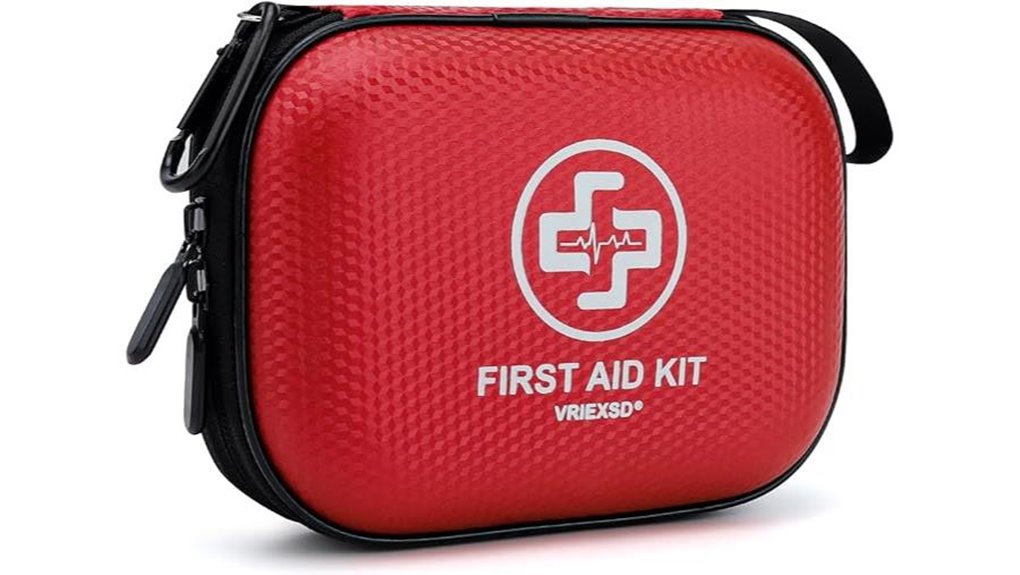
If you’re planning a road trip, hike, or simply need a reliable emergency kit that fits in your backpack, this mini 150‑piece waterproof hard‑shell kit is the perfect fit. Inside, you’ll find 150 professional‑grade supplies: bandages, lint‑free gloves, a povidone‑iodine pad, metal tweezers, and a tourniquet—100 % latex‑free. The compact 6.4 × 4.9 × 2.7‑inch case weighs only 0.73 lb, featuring hard‑shell EVA, PU‑coated laminate pockets, and a carabiner with backpack hook. Labeled sleeves give you quick access, so when an emergency strikes, you can locate the exact tool without fumbling. Carry it under your seat or in a rooftop box, and stay prepared today.
Best For: families or outdoor enthusiasts who need a compact, waterproof first‑aid kit that fits neatly in a backpack or car roof box.
Pros:
- Extremely lightweight (0.73 lb) and compact (6.4 × 4.9 × 2.7 in.) for easy portability.
- Durable hard‑shell EVA body with PU‑coated laminate pockets keeps contents dry and protected in any weather.
- 150 professional‑grade supplies—including latex‑free bandages, gloves, povidone‑iodine pad, metal tweezers, and a tourniquet—organized in clear, labeled sleeves for quick access.
Cons:
- Limited to 150 items, so it may not include larger or specialty supplies (e.g., epinephrine auto‑injectors, large arterial tourniquets) needed for some emergency scenarios.
- The PU‑coated interior prevents soaking, which may be inconvenient if the bag becomes saturated during very heavy rain.
- The built‑in carabiner and backpack hook fit most gear, but some bulky backpacks or larger tents may not accommodate it well without additional adjustment.
https://www.amazon.com/dp/B0DB794BKQ
107-Piece Portable Outdoor First Aid Kit
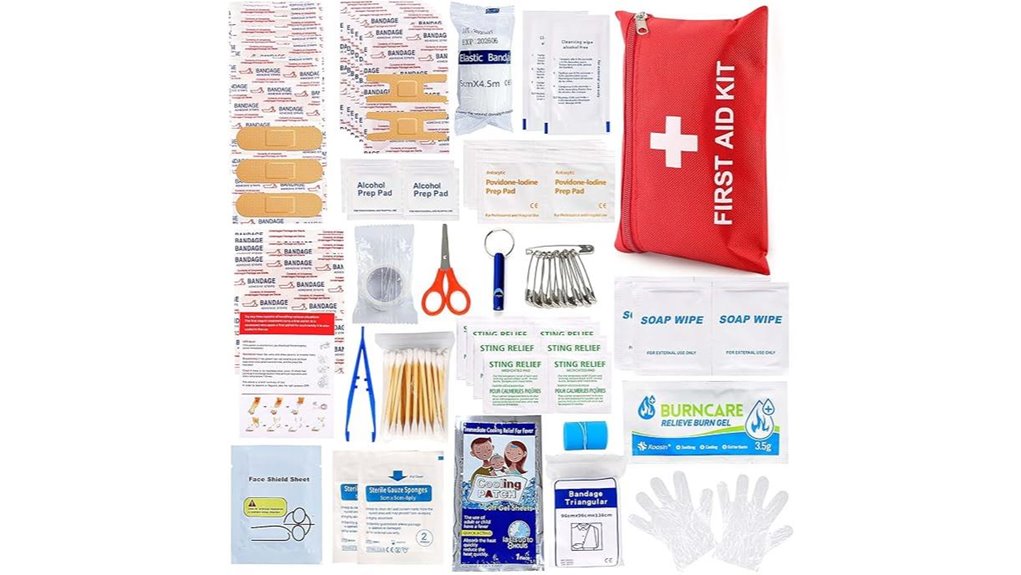
When you hit the trails or hop in a rental car, having a 107‑piece portable outdoor first‑aid kit on hand means you’ll never be caught off‑guard. The kit’s soft zipper case measures 7.5 × 5.2 × 1.5 in., making it lightweight for 107 items. Inside, sleeves group supplies—bandages, gauze, antiseptic wipes—so you locate what you need within seconds during an emergency right now. A detailed instruction manual walks you through common scenarios—treating blisters, splints, or a cut—so beginners feel confident. Its versatility lets you keep the kit in your backpack, glove compartment, or home office, ready for hikes, boat trips, or any roadside situation.
Best For: This kit is ideal for outdoor enthusiasts, frequent travelers, or anyone who needs quick, organized emergency care on the go.
Pros:
- Lightweight and compact with a 7.5 × 5.2 × 1.5‑inch soft zipper case that fits easily in a backpack, glove compartment, or desk.
- Internally organized sleeves group supplies by category, making rapid location of items during an emergency simple.
- Comes with a comprehensive instruction manual that guides beginners through common first‑aid scenarios.
Cons:
- Though portable, the 107 items can still be bulky in very tight storage spaces.
- The kit is designed for general first aid; it may lack specialized equipment for more advanced medical needs.
- Price point may be higher than basic kits, potentially deterring budget‑conscious purchasers.
https://www.amazon.com/dp/B0CQ4PBNG6
Mini 100-Piece Waterproof First Aid Kit (Black)
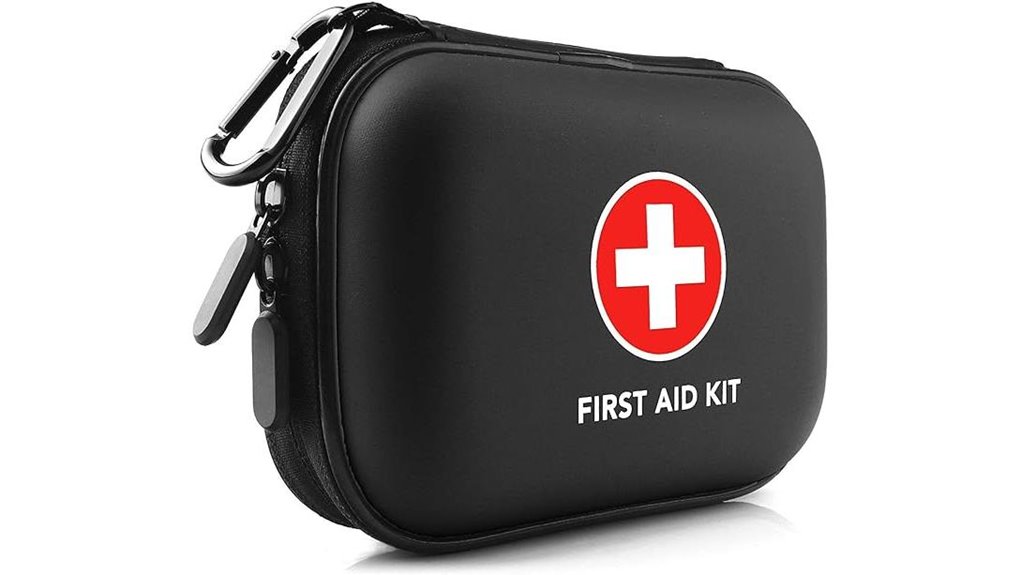
Because it’s only 6.2 × 4.4 × 2.1 cm yet holds 100 hospital‑grade supplies, this tiny kit is the perfect choice for travelers who need serious first‑aid power without bulk. You’ll find 100 pieces of hospital‑grade bandages, gauze pads, iodine pads, burn gel, and PVC gloves—all ready for quick use. International standards certify safety, so you can trust every item. The PVC‑reinforced shell, dual‑zip closure, and carabiner let you attach it to your pack, vest, or belt effortlessly. Weighing only 240 g, it’s compact yet durable, even when exposed to water. Perfect for travel, hiking, boating, or office use, it also suits schools and cars.
Best For: people who need a quick, lightweight, and reliable first‑aid solution on the go—whether you’re traveling, hiking, boating, or simply want a solid emergency kit at home or in the office.
Pros:
- Extremely compact (6.2 × 4.4 × 2.1 cm) yet holds 100 hospital‑grade supplies.
- Waterproof EVA exterior with dual‑zip closure and integrated carabiner for easy attachment.
- Certified to international safety standards, ensuring every item meets quality benchmarks.
Cons:
- 240 g weight may still feel substantial for ultra‑minimalist travelers.
- No specialized containers for smaller items, so organization within the case can be limited.
- No accompanying first‑aid guide or instruction sheet, requiring users to be familiar with basic emergency care.
https://www.amazon.com/dp/B0974KYD1J
152-Piece TSA-Approved Mini First Aid Kit
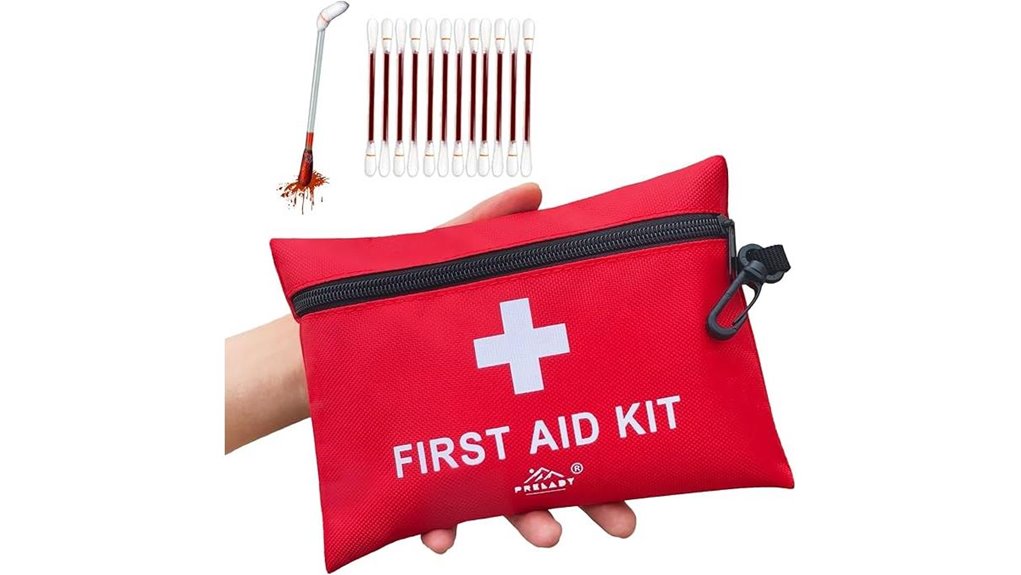
The 152‑piece kit packs all the essentials into a 7.8 × 5.95‑inch, sub‑lb package, making it the go‑to travel safeguard for jet‑setters and daily commuters alike.
You’ll find bandages, gauze, antiseptic wipes, and adhesive strips—everything you need for cuts, blisters, and minor burns. The kit fits as a <1 lb, 7.8×5.95‑inch case that fits any carry‑on, backpack, glove box, or purse. It meets TSA carry‑on rules and international flight requirements, so you won’t face delays at security. Whether you’re at home, on the road, or exploring the wilderness, you’ll know the kit’s ready for any situation. Pack it, travel confidently, always.
Best For: travel‑savvy individuals, commuters, and outdoor enthusiasts who need a compact, TSA‑approved first‑aid solution.
Pros:
- TSA‑approved and airline‑ready, works for any carry‑on or checked luggage.
- Extremely lightweight (<1 lb) and small (7.8 × 5.95 in.)—fits backpacks, glove boxes, or briefcases.
- 152 essentials, from bandages to antiseptic wipes, covering cuts, blisters, minor burns, and other everyday injuries.
Cons:
- Not designed for severe or life‑threatening emergencies such as major bleeding or fractures.
- Some items, like gauze or adhesive strip sizes, may be smaller than standard first‑aid kit components.
- No specialized tools for advanced medical interventions (e.g., tourniquets or splints).
https://www.amazon.com/dp/B0F1YHY2K7
Johnson & Johnson First Aid to Go Portable Mini Travel Kit, 12 Pieces
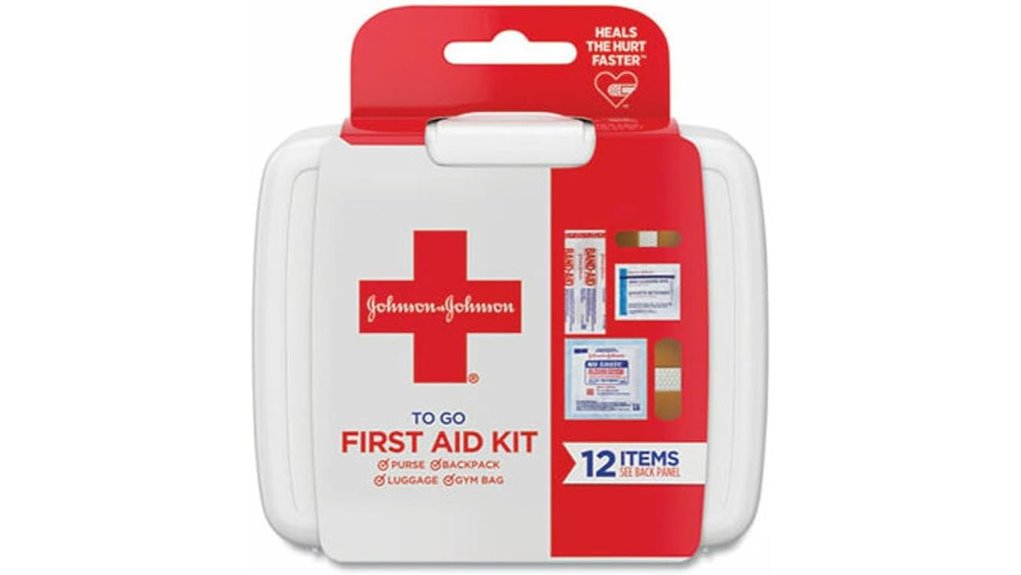
For travelers who need instant, reliable care, the Johnson & Johnson First Aid to Go Portable Mini Travel Kit’s 12‑piece, pocket‑sized design makes it the ideal choice. You’ll fit it into a purse, backpack, gym bag, or luggage without sacrificing space. Inside, you’ll find two hand‑cleansing wipes, four 2×2‑inch gauze pads, and a mix of bandages sized 0.75×3 inches and 0.63×2.25 inches. These supplies give you quick, effective first aid for slips, cuts, or minor blisters while camping, vacationing, or at sporting events. Be wary of latex in items; replace wipes or pads when used up, keeping it ready.
Best For: travelers and outdoor enthusiasts who need a compact, ready‑to‑use first aid kit for minor injuries on the go.
Pros:
- Portable, compact size fits easily into bags or luggage.
- Includes essential supplies (wipes, gauze, bandages) for common injuries.
- Durable case protects contents and keeps the kit organized.
Cons:
- Contains latex in some items, which may trigger allergies.
- Limited item quantity means it’s not suitable for serious injuries.
- No pain relievers or antiseptic solutions are included.
https://www.amazon.com/dp/B002OTHOPE
First Aid Only 298 Piece All-Purpose Kit
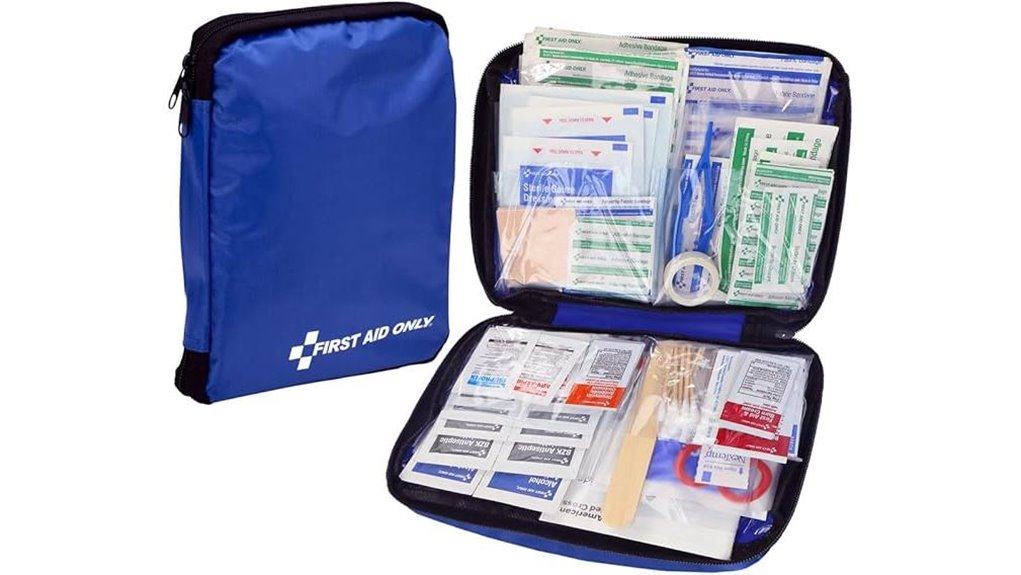
If you’re a traveler who values space and preparedness, this 298‑piece kit lets you carry 298 essential items in a 9.25‑inch‑long, 2.875‑inch‑wide case—so you never have to sacrifice safety for convenience. You’ll find fabric and plastic bandages, antibiotic ointment, BZK antiseptic wipes, burn‑cream packs, gauze rolls and pads, wound‑closure strips, and a cold pack—all neatly stored in two layers with clear pockets for fast access. The soft‑sided zippered case measures 9.25×2.875×7 inches and fits in a glove box, vehicle cup holder, backpack, or home drawer without taking up much space. It qualifies as HSA‑ and FSA‑eligible, boosting your savings today.
Best For: travelers, busy professionals, and anyone needing a compact yet comprehensive first‑aid solution.
Pros:
- 298 items covering a wide range of emergencies from cuts to burns.
- Slim 9.25 × 2.875 × 7‑inch zippered case fits glove boxes, backpacks, or desks.
- HSA‑ and FSA‑eligible, letting you save on health‑care costs.
Cons:
- Higher upfront cost than smaller kits.
- Can become heavy when all 298 items are packed.
- Not designed for medical‑grade supplies or large‑scale trauma.
https://www.amazon.com/dp/B000069EYA
138-Item Mini TSA First Aid Travel Kit
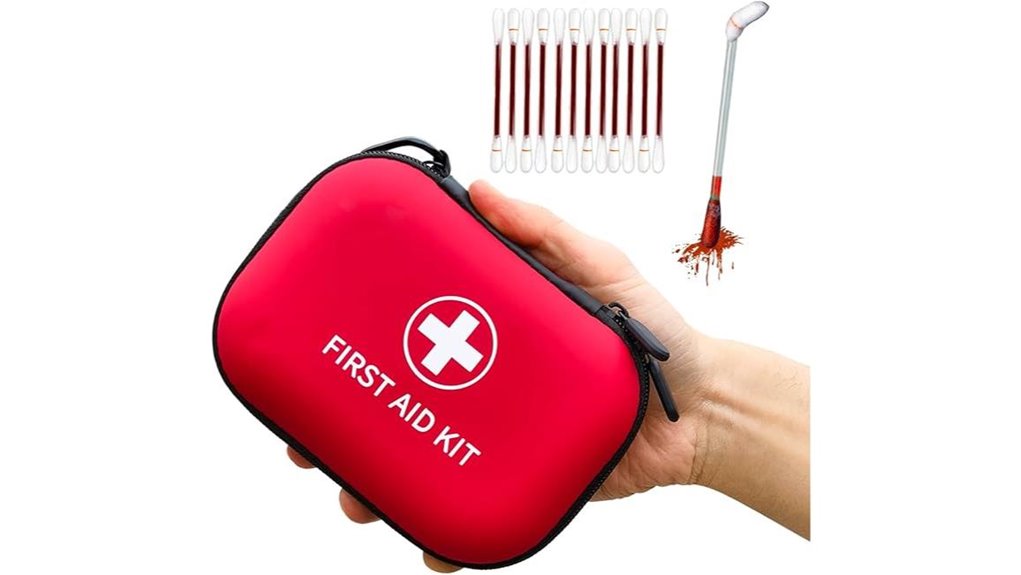
Because it packs an impressive 138‑item arsenal into just a 0.5 L, TSA‑approved case, this mini kit promises that every minor injury can be handled on the go.
You’ll find everything from gauze and bandages to scissors, tweezers, and pain relievers neatly organized in water‑resistant compartments that keep items dry and accessible. The case’s solid build fits effortlessly in your carry‑on or glove compartment, while the lightweight design means you’ll bite into extra weight. Whether heading for a business trip, a summer road‑trip, or a weekend hike, this kit lets you handle cuts, blisters, or minor wounds safely without baggage.
Best For: Frequent travelers, commuters, and outdoor enthusiasts who need a compact, TSA‑approved first aid solution on the go.
Pros:
- TSA‑approved, fitting all airline carry‑on regulations.
- 138 essential items in a lightweight, water‑resistant case.
- Easy‑to‑use compartments keep supplies organized and dry.
Cons:
- Limited to minor injuries; not a substitute for professional medical care.
- Some items may be too small for larger wounds or more serious conditions.
- The kit can be relatively expensive compared to DIY supplies.
https://www.amazon.com/dp/B0DK169KQ7
Mini 150-Piece Waterproof Hard-Shell First Aid Kit
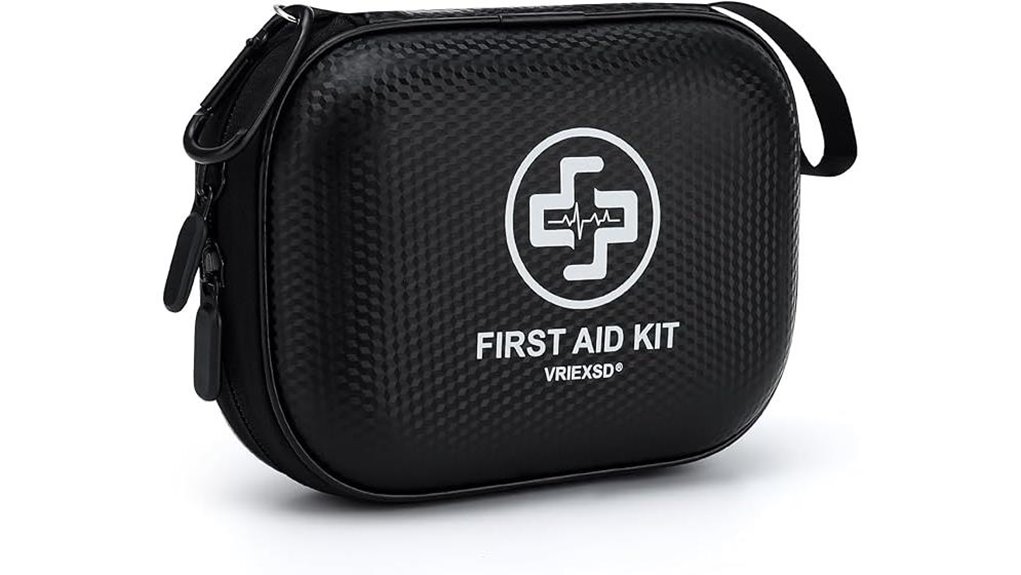
The compact 6.4 × 4.9 × 2.7‑inch, 0.73‑lb kit proves itself as the ultimate on‑the‑go first aid solution. You’ll find more than 150 professional‑grade supplies inside, from bandages to povidone‑iodine prep pads and metal tweezers. Each item sits in a small, independently labeled sleeve, so you can sift through chaos in seconds. Premium zippers, carabiners, and a hanging loop let you clip it onto backpacks or car bags hassle‑free. The hard‑shell EVA body and PU surface keep everything dry, even after splashes, making it perfect for hiking, boating, or office use, and keep your mind always safe whether you’re traveling or staying home.
Best For: outdoor enthusiasts, families, and anyone who needs a reliable, compact first aid kit that stays dry and organized on the go.
Pros:
- Ultra‑compact 6.4 × 4.9 × 2.7‑inch design keeps it portable to cars, backpacks, or office drawers.
- More than 150 professional‑grade supplies provide comprehensive emergency tools without bulk.
- Waterproof EVA shell and PU coating protect contents from water, splashes, and dust.
Cons:
- The hard‑shell construction adds a bit of weight compared to soft‑sided kits.
- Some compartments may be too small for larger items, making storage a challenge.
- Higher quality materials and extensive contents push the price point above basic first aid kits.
https://www.amazon.com/dp/B0DB794NGL
General Medi Mini 110-Piece First Aid Kit
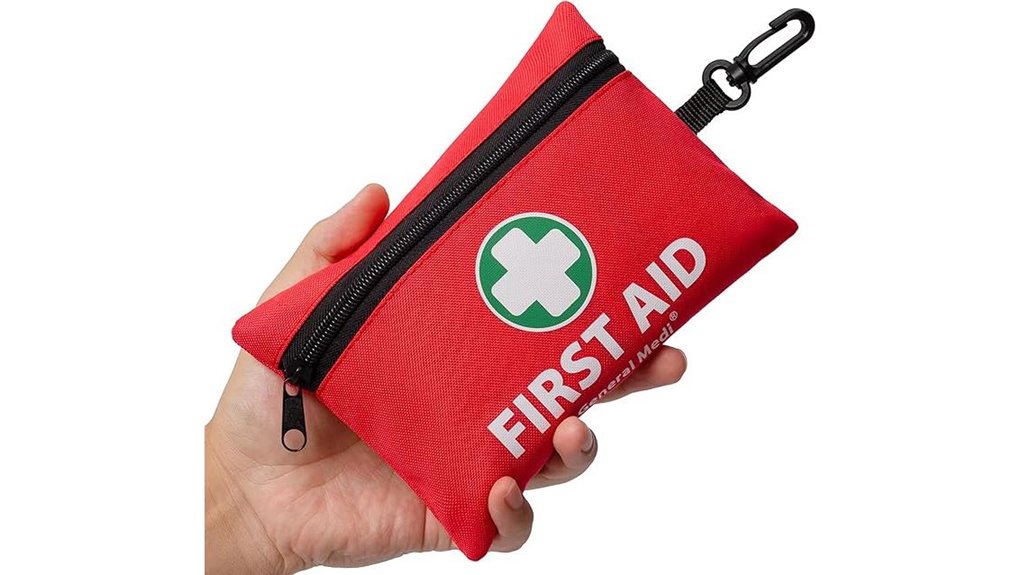
Looking for a compact, travel‑friendly first‑aid solution? The General Medi Mini 110‑Piece Red Variant packs hospital‑grade supplies into a 0.35 lb pouch. It holds 110 items: bandages, gauze, adhesive tapes, antiseptics, a medical scissor, and an emergency foil blanket. Certified to global safety standards, the kit delivers reliable emergency care for minor wounds and bleeding control. Lightweight and durable, its acrylic case fits your car, school bag, office desk, or boat. Whether at home or on a road trip, this kit offers peace of mind for quick, on‑the‑spot first aid. It’s compact enough to slip into any pocket and keeps essentials organized.
Best For: individuals who need a lightweight, portable first aid solution for cars, schools, homes, or outdoor adventures.
Pros:
- 110 pieces of hospital‑grade supplies for comprehensive minor wound care
- Certified to global safety standards, ensuring trusted quality
- Ridiculously lightweight (0.35 lb) and durable acrylic case for easy transport
Cons:
- Lacks advanced medical tools like a tourniquet or advanced wound dressings
- Small pack may be insufficient for large‑scale emergencies or heavy‑duty use
- Red color may be more visible and less discreet in certain settings
https://www.amazon.com/dp/B0747N5KDM
Adventure Medical Kits Smart Travel First Aid Kit
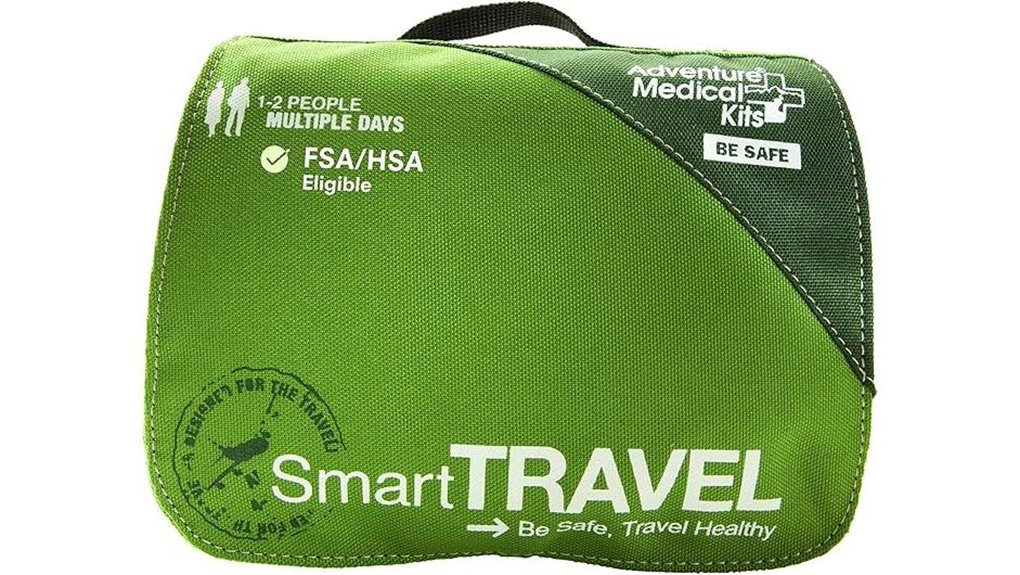
If you’re traveling abroad, this kit’s built‑in visual communication tool keeps you connected in any language, making it the ideal fit for globetrotters who need swift, clear medical guidance. The Adventure Medical Kits Smart Travel First Aid Kit weighs just 0.45 kg and measures 9.8 × 6.22 × 3.11 in, so it slips easily into any backpack. Inside, you’ll find professional‑grade scissors, precision forceps, and bandages that treat pain, inflammation, and common allergies. Its green pouch looks sleek, and the 15.2‑ounce content strikes a perfect balance between portability and all‑encompassing. Grab it and stay protected wherever you roam and enjoy peace of mind while exploring.
Best For: globetrotters and travelers who need quick, language‑independent medical assistance on the go.
Pros:
- Built‑in visual communication tool eliminates language barriers.
- Includes professional‑grade scissors, precision forceps, and bandages for comprehensive care.
- Compact, lightweight design (0.45 kg, 9.8 × 6.22 × 3.11 in) fits easily in backpacks.
Cons:
- Limited size may not cover more extensive injuries.
- Relies on a single visual tool; may miss nuanced medical signs.
- Green pouch may not appeal to all style preferences or blend with formal travel attire.
https://www.amazon.com/dp/B0026MRZQM
PTEROMY 150-Piece Portable Mini First Aid Kit
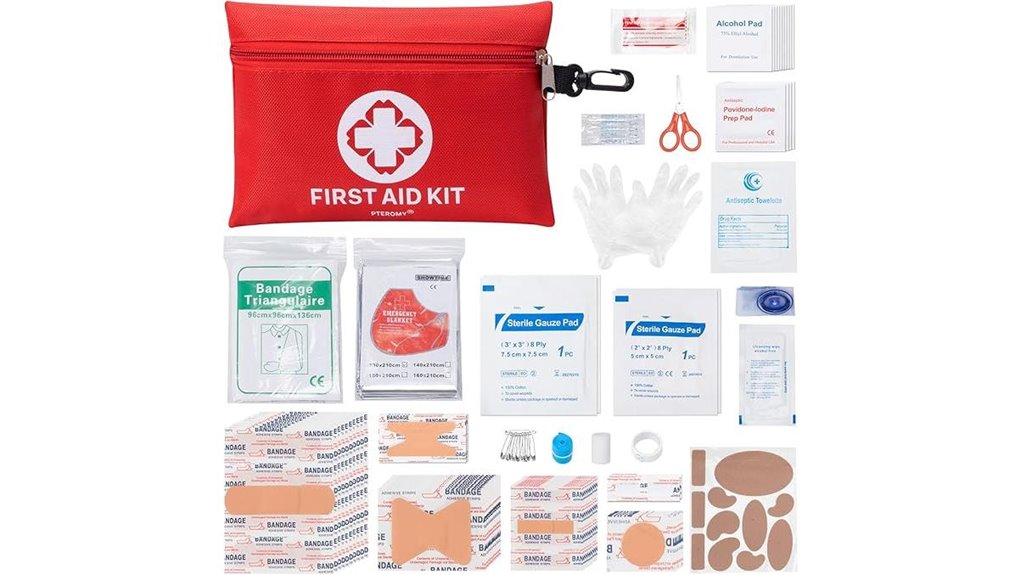
Packed with 150 essential items, this mini kit slides into any travel bag, its compact case keeping supplies organized for backpackers, city explorers, and weekend campers alike. You’ll find adhesive band‑aids, burn dressings, triangular bandages, safety pins, cleansing wipes, emergency blankets, a tourniquet, plus scissors and extra pins—all ready for cuts, burns, bruises, and trouble‑spots. The breathable cotton case protects gear from rain and lets you stash it efficiently in a backpack, desk drawer, or luggage. Whether commuting, hiking, or boating, this kit meets daily and wilderness needs with high safety‑compliant quality and a satisfaction guarantee for any adventure.
Best For: travelers, commuters, and weekend adventurers who need a compact, fully stocked first aid kit that fits easily in backpacks, desk drawers, or luggage.
Pros:
- 150 essential items cover cuts, burns, bruises and common emergencies.
- Breathable cotton case protects gear from rain and keeps supplies organized.
- Safety‑compliant supplies with a satisfaction guarantee for peace of mind.
Cons:
- Does not include a detailed instruction manual (available only in the 300‑pc version).
- Lacks a waterproof case, limiting use in wet or very damp environments.
- 150 pieces may be insufficient for specialized medical needs or extended expeditions.
https://www.amazon.com/dp/B0D8HMNT8Z
Swiss Safe 2-in-1 Car Travel First Aid Kit
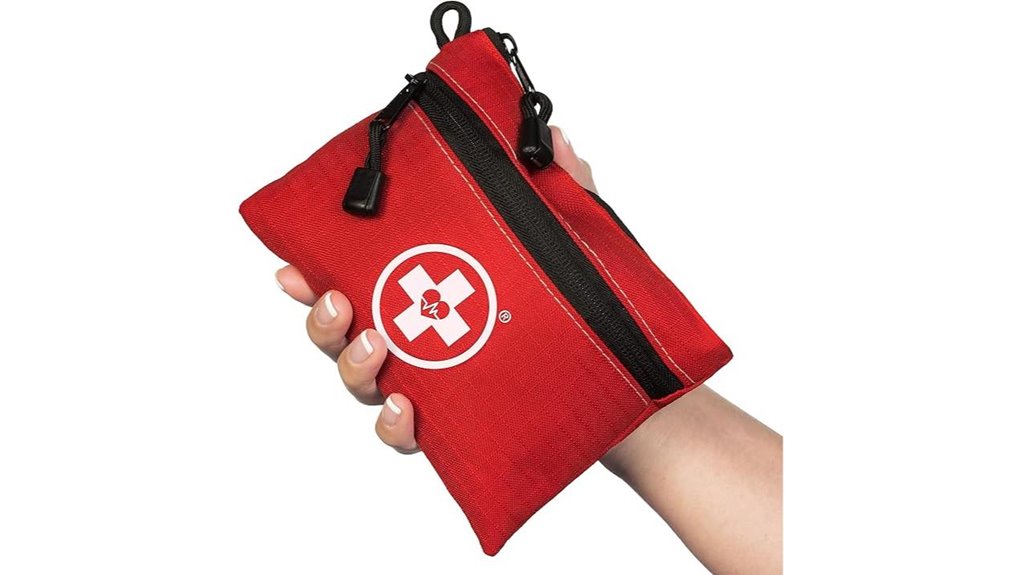
For busy commuters and weekend hikers alike, the Swiss Safe 2‑in‑1 Car Travel First Aid Kit slides a full 64‑piece medical arsenal into a rugged nylon case that fits neatly in any glove box or backpack.
You’ll find bandages, relief pads, a mylar blanket, a starter rod, a saw, fishing line, and items covering a range of injuries. The woven nylon case withstands rough handling, keeping the kit light durable. Its organized interior lets you locate gear instantly, and the space lets you add supplies. Having this kit boosts confidence, ensuring you’re always ready on the road or trail.
Best For: The Swiss Safe 2‑in‑1 Car Travel First Aid Kit is ideal for commuters, weekend hikers, families, and professionals who need a lightweight, durable all‑in‑one kit that fits neatly in a glove box or backpack.
Pros:
- 64‑piece arsenal covering a wide range of injuries, including bandages, relief pads, a mylar blanket, a fire starter rod, a wire saw, and fishing line.
- Rugged woven‑nylon case resists rough handling while remaining lightweight and compact.
- Organized interior and extra space allow quick access and easy customization with personal supplies.
Cons:
- Its relatively large size may not fit in very small glove boxes or tight storage spaces.
- Higher price point compared to basic first‑aid kits.
- Extra weight when fully stocked may be a drawback for those seeking a minimal‑ist pack.
https://www.amazon.com/dp/B07DHW3ZCF
Portable 143-Piece First Aid Kit for All
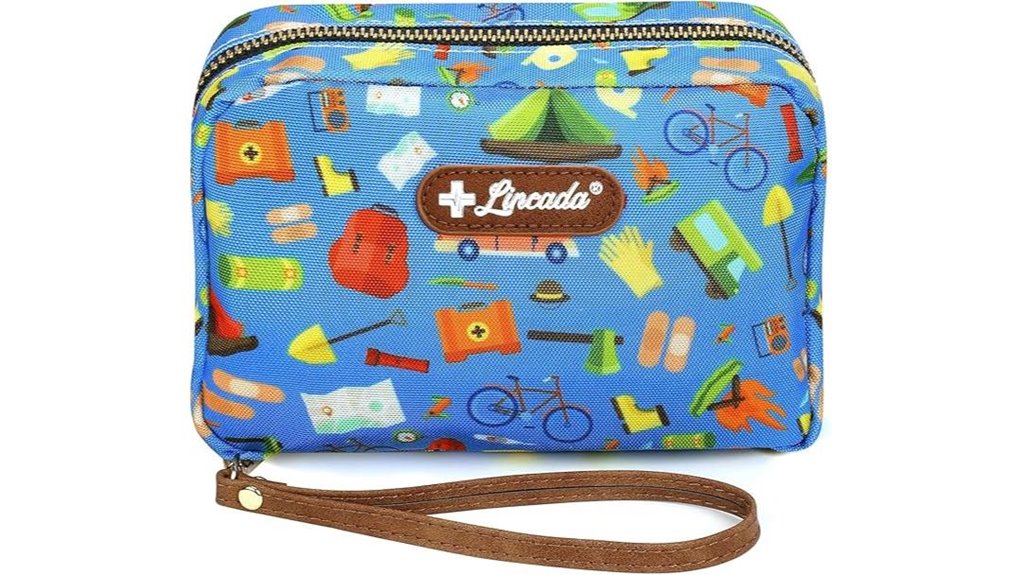
Whether you’re jetting across continents or hiking a local trail, you’ll find that this 143‑piece kit keeps your health in check with its compact, lightweight design and organized, labeled interior. Inside, you discover 143 individual supplies—from wound‑care staples to antiseptic wipes, gauze, and safety pins—plus a versatile multi‑tool set. Its lightweight build fits snugly in purses, gym bags, or even glove compartments, guaranteeing quick access whenever an emergency arises. Whether tackling mishaps, hiking trails, or car hassles, the kit adapts. Waterproof compartments guard against moisture, while labeled sections let you find supplies instantly. 24/7 support offers peace of mind.
Best For: travelers, athletes, and home keepers who need a quick‑access, all‑in‑one first‑aid solution.
Pros:
- 143‑piece kit with comprehensive supplies (bandages, staples, antiseptic, multi‑tool).
- Compact and lightweight—fits in purses, gym bags, glove compartments, etc.
- Waterproof, labeled compartments ensure fast retrieval and moisture protection.
Cons:
- Bulkier than minimalist kits, may feel heavy for some users.
- The multi‑tool can be awkward for quick use in emergencies.
- Some consumers may find the 143-piece inventory more than needed for simple routines.
https://www.amazon.com/dp/B0CQR64Y62
Everlit Pocket-Aid Mini 50-Item First Aid Kit
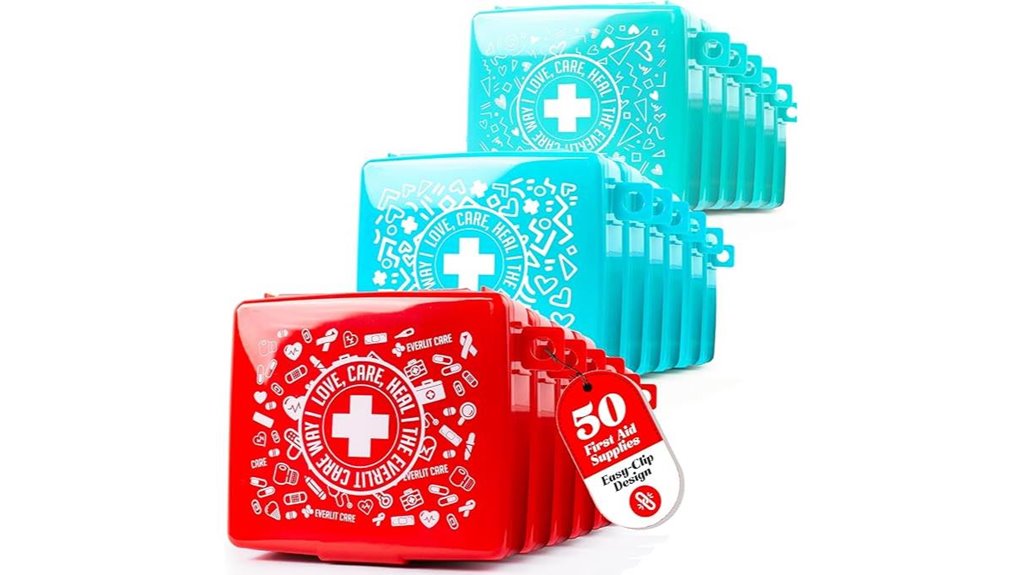
Travelers who value compact yet reliable first‑aid solutions will appreciate the Everlit Pocket‑Aid Mini’s 24 hard‑shell cases, each holding 50 premium items for a total of 1,200 pieces.
You’ll find adhesive plasters, sterile gauze pads, non‑adherent pads, wound prep pads, medical tapes, sting relief pads, and other essential wound‑care tools neatly organized in each case.
The hard‑shell, water‑resistant design protects against impact and moisture, while the D‑ring slot lets you attach it to a strap, belt or bag for easy, hand‑free access during travel, hikes, or everyday use.
With 1,200 hospital‑grade supplies, you’ll feel confident covering minor injuries anytime.
Best For: Parents, travelers, and outdoor enthusiasts who need a compact, reliable first‑aid solution for everyday emergencies.
Pros:
- 24 hard‑shell cases, each holding 50 premium supplies for a total of 1,200 items.
- Water‑resistant, impact‑proof construction with D‑ring holder for easy, hand‑free access.
- Eye‑catching, vibrant colors and patterns add style to function.
Cons:
- Limited to basic wound‑care; does not include advanced medical equipment.
- 24 individual cases make it bulkier than single‑box kits for ultra‑minimalists.
- Costly compared to single‑case first‑aid kits.
https://www.amazon.com/dp/B0DKHCQB35
DMI Mini 20-Piece First-Aid Kit
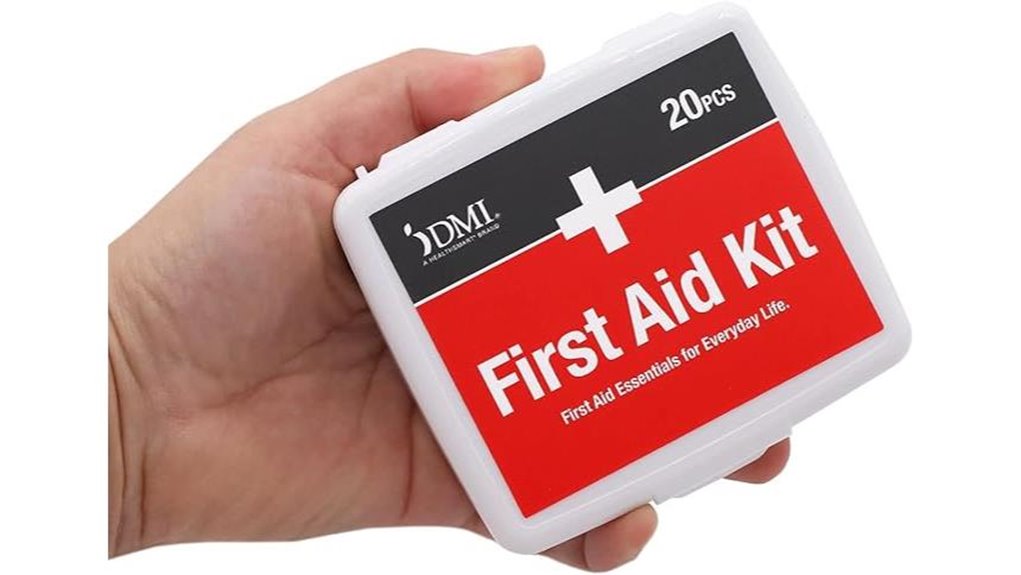
Its 0.13‑lb, 4‑inch‑by‑3.5‑inch footprint lets you tuck the kit into a glove box, backpack, or handbag—no extra bulk, no hassle. You can carry it anywhere: cars, travel bags, desk drawers, or handbags, and the durable, water‑resistant case keeps supplies organized and protected. Inside, 20 pieces cover basic needs: six alcohol swabs, two gauze pads, a 1‑inch bandage roll, ten strips of tape, plus assorted adhesive bandages. It handles minor cuts, scrapes, burns, and blisters when professional help is unavailable. For longer trips, upgrade to 76‑, 175‑, or 298‑piece versions. Small, light, and reliable—your everyday companion for peace of mind.
Best For: Travelers, commuters, and anyone needing a lightweight, on‑the‑go first‑aid solution.
Pros:
- Ultra‑compact size fits in a glove box or handbag
- Durable, water‑resistant case protects contents from moisture
- Comes with essential items (bandages, swabs, tape) for minor injuries
Cons:
- Limited 20‑piece kit may run out for larger wounds
- Lacks ointments, antibiotic creams, or gauze beyond two pads
- Not suitable for serious burns, deep cuts, or complex medical emergencies
https://www.amazon.com/dp/B0BQJQZ46L
Factors to Consider When Choosing First Aid Kits for Travel (Actually Useful Contents)
You’ll want a first‑aid kit that’s small and lightweight, so it sits snugly in your backpack without weighing you down. Think about how easy it is to grab on the go—look for features like a magnetic closure or carabiner loop that keep it ready and tidy. Finally, make sure the contents match your route, the box’s build can stand the travel test, and it meets airline or border regulations so you’re compliant at every stop.
Size and Weight
How big and how heavy can a travel first‑aid kit get without weighing you down?
You’ll want overall dimensions under roughly 8 × 5 × 3 inches, so it slides easily into a handbag, glove box, or backpack pocket without eating valuable luggage space. Weight matters too: keep the kit to about 1 lb (≈ 0.45 kg) to meet most carry‑on rules while still holding essential supplies. Mid‑size kits of around 120 items usually land between 0.35 and 0.75 lb, striking a balance between completeness and lightness. A 6.5 × 4.5 × 2.5‑inch case fits snugly in a day‑pack and holds bandages, gauze, and a tourniquet without bulk. Hard‑shell EVA or vinyl cases add only a few ounces over soft‑sided pouches, delivering durability without a heavy footprint. Choose a case that balances sturdiness with weight today.
Portability Features
When packing a travel first‑aid kit, the size and weight you’ve already considered set the stage for the next set of features that keep it functional in the field. Choosing a case that measures roughly six to eight inches long, four to six wide, and one to three deep lets you tuck it into glove boxes, small luggage compartments, or backpack pockets without digging into your carry‑on space. Because it weighs under a pound, you’ll notice little heft even when you’re trekking or hiking for hours. A hard‑shell EVA or TPU enclosure with a PU‑coated interior bag shields supplies from rain, heat, and knocks while keeping the case lightweight. Quick‑access designs—dual zippers, pull‑tabs, hinged sides—let you retrieve essentials in seconds on the go anytime.
Supply Variety
A well‑balanced kit blends dressings, antiseptics, analgesics, tools, and gloves to cover the most common travel injuries. You’ll need adhesive bandages—small, medium, large—plus gauze pads and rolled gauze for cuts, scrapes, and deeper lacerations. Supply at least two antiseptic options: an alcohol swab and an iodine or chlorhexidine pad, so you can clean wounds regardless of the contaminant. A quick‑relief pain option, like an oral tablet or a topical pain patch, keeps discomfort from derailing your journey. Include scissors, tweezers, and a tourniquet for debris removal, tape cutting, or severe bleeding. Pack multiple latex‑free sterile gloves; they protect you and any wounded traveler from allergens. Make sure your glove supply includes at least two pairs, consider adding a ruler for measuring limbs during splinting.
Durability Standards
Because a first‑aid kit must stay functional amid jostling, spills, and wear, you’ll want to evaluate its build quality from shell to closures. Seek a shell finished in waterproof EVA; it repels moisture, deflects light abrasion, and keeps contents dry during unexpected spills. A hard‑shell frame with double‑layered seams and heavy‑dug zippers endures repeated jostling, compression, and impact. Inside, PU‑laminate lining offers a smooth, non‑irritating surface that remains dry even if liquids seep in. Hooks and loops should come from galvanized or stainless steel and endure at least 140 lb of tension—protecting the kit from sudden jolts or vigorous activity. Finally, a reliable kit must survive minimum 30 flexing‑compression cycles typical of backpacking, car travel, or everyday handling without leaking or breaking everywhere you travel.
Travel Compliance
After you’ve confirmed the kit’s durability, you’ll need to check that it fits airline rules before packing. Measure it: the kit must stay within 22 × 14 × 9 in. (56 × 36 × 23 cm). When adding liquids, keep each container under 100 mL and slot all into a quart‑size clear bag for TSA inspection. Avoid containers holding hazardous chemicals, lithium batteries, or weapon‑related items—those are prohibited from the cabin. Follow IATA guidance by sealing the kit in a tamper‑evident bag or hard shell case to guard against contamination. A zip keeps contents secure. If you’re traveling, check the destination restrictions, as some medical supplies may be reclassified. Keep a copy of the kit’s inventory in a folder checkpoints, and remember that kits 1 lb (≈0.45 kg) trigger excess‑baggage fees, so weigh it before you fly.
Regulated Contents
If you’re packing for a trip, TSA rules set strict limits on liquids, cutting tools, and antiseptics. Each liquid, gel, or aerosol must not exceed 3.4 oz (100 mL) and go in a clear, resealable bag for inspection. Scissors or razors longer than 4 in are banned; keep tools under that length or omit them. Wipes or pads with more than 30 % alcohol are prohibited; choose alcohol‑free or ≤30 % solutions and approved antiseptics. Pack bandages, gauze, tape, tweezers, and safety pins in single‑use or small resealable compartments to meet TSA and health‑authority standards. Finally, document the total count of regulated items so you stay within both U.S. and destination limits. Label each compartment and keep a list inside the kit for retrieval during security screening for travel.
Ease of Access
When you need an item fast, a quick‑open zipper can cut retrieval time to under five seconds. If you label each compartment in bright color—bandages in red, gauze in blue, antiseptic in green—finding what you need feels almost instantaneous, cutting look‑ups in half. A translucent bottom panel lets you glance at stock, trimming decision time by up to 20 %. Attaching a wrist strap or carabiner keeps the kit in arm’s reach, letting you steady yourself inside a moving vehicle without juggling. Finally, pre‑sorted, single‑access pockets for high‑frequency items like adhesive bandages or scissors mean you can grab what you need without opening the whole kit. When emergencies strike, these design choices reduce hesitation, letting you attend to injuries swiftly and confidently right away.
Domande frequenti
Which Countries Require Additional First Aid Supplies for Travelers?
Many travel destinations require extra supplies. In malaria‑hot regions such as South Africa, Tanzania, and the DRC, carry antimalarials and insect repellent. In Yemen and other conflict zones, pack a trauma kit, antiseptics, and pain relievers. For Mexico, the Caribbean, and Central America, bring antidiarrheal pills, a rehydration sachet, and insect bite cream. In high‑altitude spots like Nepal, include oxygen tablets and altitude sickness meds. Verify you check local regulations.
Is It Legal to Carry Prescription Drugs in an Official First Aid Kit?
You might think sticking prescription meds in an official first aid kit makes you a Houdini of healthcare. In reality it’s generally legal if you’re honest, carry documentation, and keep quantities modest. Airlines check for restricted substances, so mark every pill. Be mindful: exceeding limit can trigger seizure, fines, and a detective’s timeline. Keep the kit hygienic, and you’ll pass through most customs. Travel smart, humor harmless and enjoy today.
How Often Should I Restock a Travel First Aid Kit?
You should refresh your travel first aid kit every month, or sooner if you’ve used any items. If you travel frequently, check its contents before each trip. Replace expired meds, bandages, and ointments right away. Keep a spare pack handy. When you’re away for weeks, grab a new kit or top it up. Doing this keeps you safe and the kit reliable. This practice stops items from degrading, maximizing safety.
Can I Use a Regular Bandage Kit as a First Aid Kit?
Yes, you can use a regular bandage kit, but you’ll need to add a few extra items to cover all bases. Consider including gauze pads, antiseptic wipes, plastic wrap, adhesive tape, a small pair of scissors, and a blister treatment product. Without these, you’ll struggle with deeper cuts, open wounds, or blisters during travel. So, upgrade your kit before you hit the road, and always check expiration dates too today.
What Is the Best Way to Store a First Aid Kit in a Small Suitcase?
Pack your first aid kit in a small suitcase by using a nested pouch that slides into an interior zippered pocket. Fold items loosely, then crumple into a lightweight foam insert to keep them from shifting. Label the pouch visibly, and place it near the top of your luggage to avoid crushing. It’ll keep meds close together, so you have access, and add a waterproof label with emergency contact numbers.
Conclusione
When you’re jetting across continents, the right first‑aid kit doesn’t just tick boxes—it can mean the difference between a quick recovery and a needless adventure curtailment. Picture a friend who slipped on a wet stairwell in a Bali villa, only to pull a torn ligament. A compact, TSA‑approved kit with bandages, iodine, and a tourniquet saved hours of pain and two flight seats. So, pack smart, stay safe for peace of mind over any trip.
Emergency Travel Kit, Portable Medical Kit, Travel First Aid
 Italian
  English
  German
  French
  Spanish